
In 1989, the Philippines reeled from a shock loss to Malaysia in the South East Asian Games. This was only the second time that the SEA Games basketball gold medal was not won by the Philippines. Obviously, regional basketball was now slowly catching up, and if the Philippines were to continue sending amateurs to battle, then the foreign neighbors would not have a difficult time challenging the country’s dominance in the sport. This brought the country to new depths of ignominy insofar as regional basketball was concerned.
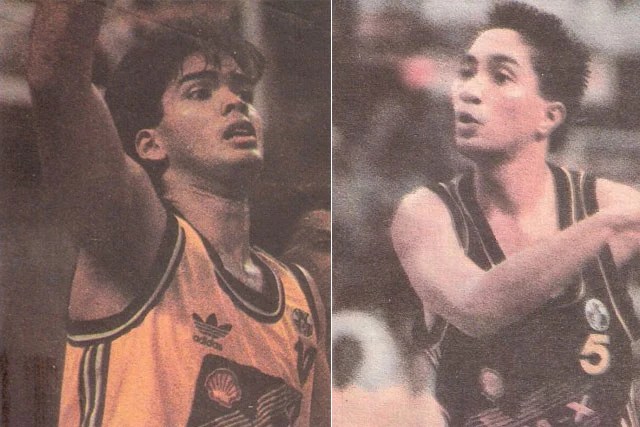
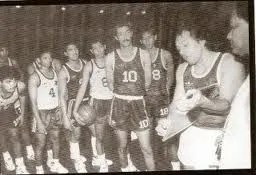
Luckily for the Philippines, FIBA would start allowing professionals to play in international tourneys in 1989. Thus, the first all-pro national team was formed in 1990 for the bigger, more challenging Asian Games. Coached by the venerable Bobby Jaworski, this all-star team would include Allan ‘The Triggerman’ Caidic, Samboy ‘The Skywalker’ Lim, Alvin ‘The Captain’ Patrimonio, Mon ‘El Presidente’ Fernandez, Hector ‘The Director’ Calma and the newest sensation in the PBA, Benjie ‘Tower of Power’ Paras. Paras had just taken the 1989 PBA season by storm with a MVP Award on top of a Rookie of the Year award, something that has never been done before nor duplicated ever since.

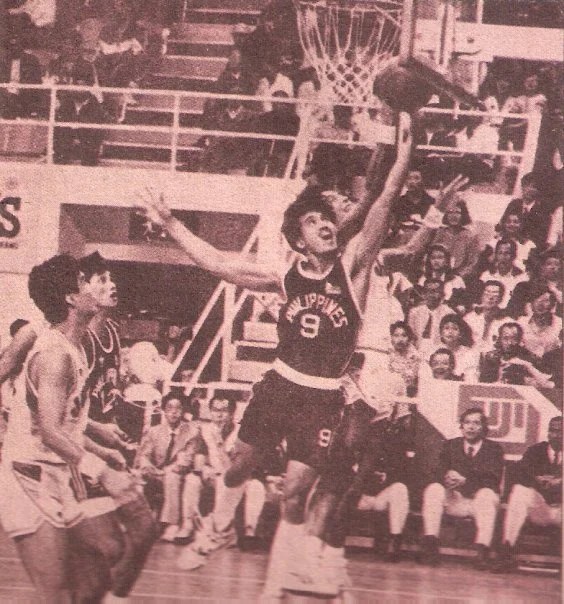
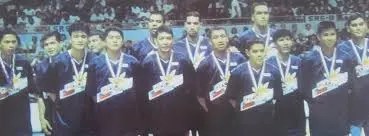
The all-pro team would provide some sort of vindication by taking home the silver medal, reaching the finals without meeting its perennial tormentor, South Korea, before bowing to the eventual champs – the powerhouse Chinese team. China had behemoths like Ma Jian, Shan Tao, Wang Fei and Song Li Gang, all of whom were already being scouted for possible recruitment into the NBA. Despite the obvious height discrepancy, the Jawo-inspired team fought gallantly, with Caidic and Lim being rewarded with spots in the mythical 5 selection.
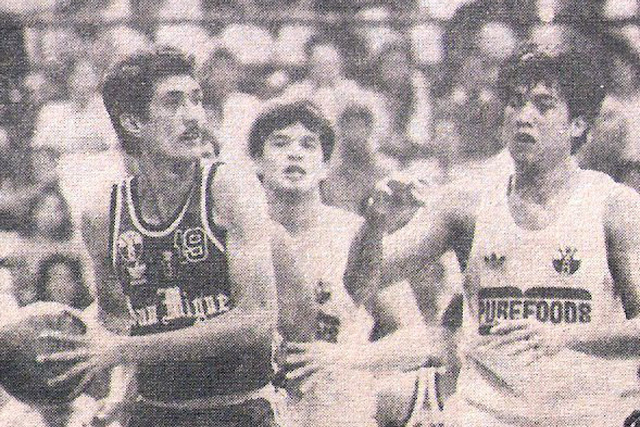
Back in the PBA, the start of the 90’s saw the San Miguel – Purefoods rivalry catching fire. Fernandez was now at the helm of the Beermen, with former NCC players such as Calma and Lim at the forefront. The Hotdogs, on the other hand, had Fernandez’ arch rival, Abet Guidaben; plus Patrimonio, Jojo Lastimoso and Jerry Codinera leading a younger, equally exciting crew. Clearly, new faces were now taking over the helm of the PBA.
In November 1991, Caidic fired a spectacular 79 points in a Presto-Ginebra game – most of which came from precision 3-point missiles – setting the record for the most points scored ever by a local in the PBA. The following year, in October of 1992, import Tony Harris of the Swift Mighty Meaties detonated a 105-point bomb in a game against Ginebra, setting a PBA record for most points in a game (import or local). To this date, both records have remained the standard in both categories. Other imports who provided excitement on the court were: Norman Black (who would stay and later become a fixture in PBA and Philippine Basketball), Bobby Parks (whose son Bobby Ray Parks Jr is now making waves playing ball in Japan’s pro league), Alaska’s consistent Sean Chambers, Kenny Redfield, and Lamont Strothers.

In the mid-90s, the Alaska Milkmen would emerge as a consistent title contender in the PBA. Imbibed with a more disciplined basketball philosophy inculcated by coach Tim Cone, Alaska players Johnny Abarrientos, Purefoods transferee Jojo Lastimoso, Bong Hawkins, Jeffrey Cariaso, and Chambers would use the Lakers’ triangle offense to perfection. And this would be propel them to another grand slam success recorded in the PBA in 1996.

In 1997, ‘The Captain’ Patrimonio would capture his 4th MVP award, after winning it in 1991, 93, 94. This would tie him for most MVPs with his mentor-turned-rival, ‘El Presidente’ Fernandez, who had captured his 4 MVPs in the 80s.
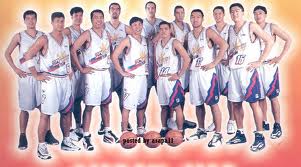
In 1998, the Centennial Team was formed. They would be led by multi-titled coach Cone. They would capture the Jones Cup, before taking the bronze in the Asian Games in Bangkok. The line-up would include Patrimonio, Caidic, Abarrientos, Kenneth Duremdez, and Vergel Meneses. Patrimonio and Caidic would gain the distinction as the only 2 Pinoy players to have been to 4 Asian Games, starting with the 1986, 1990, 1994 to the 1998 Asiads.
Also in 1998, a new league was formed to rival the PBA. The Metropolitan Basketball Association (MBA) had a similar format as the NBA, with teams representing cities or provinces. The teams would be divided into two conferences, the Northern Conference (consisting of Metro Manila and Luzon-based teams), and the Southern Conference (consisting of teams from the Visayas and Mindanao). They also had slight changes in the rules making games faster and more exciting. The first commissioner of the fledgeling MBA was the legendary Mon Fernandez himself. These would immensely help the league gain popular support in the provinces. The Pampanga Dragons would be the league’s first champs.

The arrival of the MBA would threaten the PBA. The draft system would be affected greatly, and this would lead to escalating player salaries as the two leagues competed to get the best talents. The PBA was also forced to be more aggressive with gimmicks such as the creation of the all-time mythical five selection. Named by the PBA as members of the All-Time Mythical 5 were: Caloy ‘The Big Difference’ Loyzaga (representing the 50s), Narciso Bernardo (representing the 60s), Robert ‘The Big J’ Jaworski (representing the 70s), Hector ‘The Director’ Calma (representing the 80s), and Alvin ‘The Captain’ Patrimonio (representing the 90s). Conspicuously absent in the list was Mon Fernandez, who despite his dominating 4 MVP performance in the 80s, was deliberately excluded from the list of awardees, for being the then-commissioner of the rival MBA.
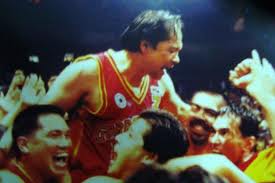
Robert Jaworski would finally retire from active basketball in 1998. At 52 years of age, he was – at the time of his retirement – the world’s oldest active professional basketball player. From among the players who started with the PBA, Jawo would be the last to retire, a clear manifestation of his durability as a player. His career started in the 60s as a young upstart from UE joining the amateur Crispa Redmanizers, before joining the YCO Painters. He then moved on to the Meralco Reddy Kilowatts, before landing with the prestigious Toyota Tamaraws in the mid-70s. From the 80s to the 90s, he would go from player to playing-coach of the immensely-popular Ginebra San Miguel team, inculcating a brand of underdog ball that spelled ‘never-say-die’.
In 1999, we had the Fil-sham scandal. One of the PBA’s answers to the MBA threat had been the recruitment of foreign players with allegedly Pinoy blood. Many of these players would be found out later to have questionable lineage. Some would somehow be able to prove their Pinoy roots and stay, such as Danny and Andy Seigle, Asi Taulava and Eric Menk. However, not a few fans abandoned the PBA as a result of the disappointing recruiting scandal. And the karma of this deliberate misrepresentation would haunt the PBA for many years. Gate receipts would go down, fewer fans would flock the stadiums, and the number of teams would dwindle.
To be continued…
(For a closer look, just click on the photos. photos courtesy of the GMA network, PhilStar.com, unknowngazxette.blogspot.com, ginebratambayan.hooxs.com, aimee829.tumblr.com, gmanetwork.com, interaksyon.com, forumsinterbasket.net)





 Color My World
👍👍
LikeLiked by 3 people