
The Philippines continues to face a multitude of challenges with the ever-changing global and local security environment. While the internal threats to the country’s security have waned significantly, we still have prevailing concerns over the Western Philippine Seas, as well as the volatile situation in nearby Taiwan, the pervading problem in the Middle East and the ongoing conflict in Ukraine. The global landscape does not look sunny at the moment, hence the need for us to be always mindful of our national security imperatives and needs.
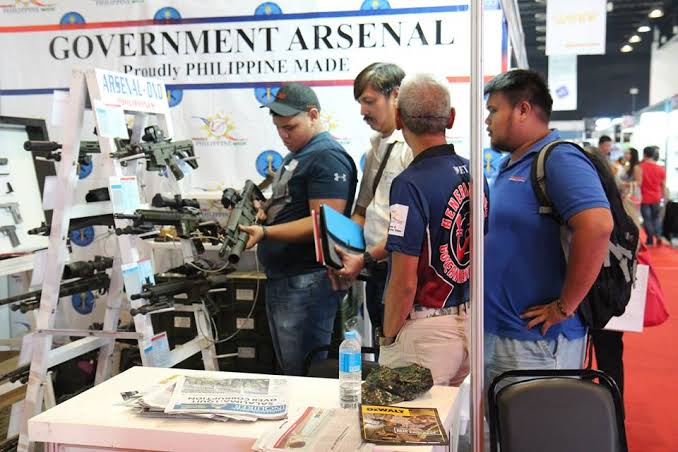
One key deterrent to ensure our national sovereignty and security is the development of a strong self-reliant defense posture. Presently, the Philippines has been relying heavily on foreign imports for its defense needs. This over-reliance on foreign supplies has made us vulnerable in many ways, particularly to political pressure, possible supply chain disruptions, as well as financial or other constraints. A case in point was the Marawi incident, where we had to scramble for various types of ammunition at the start of the conflict. A prolonged military campaign would have invited the entry of more foreign fighters and supplies. It was deemed imperative then to diffuse the flashpoint immediately. We had highly-trained and experienced ground troops capable of flushing out the terrorists led by the Scout Rangers, the Special Forces and the Marines. But would our present capabilities in the ‘move, shoot, communicate’ domains be equal to the task? Our ammo manufacturing lines in particular were found incapable of providing immediate and adequate solutions, hence our logisticians had to scramble around the world for the procurement of such critical combat needs.
Having learned this valuable lesson, it is important that we strengthen our local defense industry and build up our capabilities to ensure long-term security, self-sufficiency and stability. It is not enough that we aspire for a strong and credible defense posture. It is not enough that we acquire modern and top-of-the-line equipment. What should be emphasized is that we should invest in the development of our local defense industry, so that we are never again hostaged by any sudden non-availability of foreign stocks.
Self-reliance is not a new thing for our military establishment. As early as the 50s, the Armed Forces of the Philippines had initiated a campaign towards self-sufficiency with the creation of a Research and Development Center (RDC). Its first project was to study on manufacturing various types of ammunition locally. In the 70s, the Self-Reliance Defense Posture (SRDP) Program was created, with the noble vision of limiting our dependence on foreign support for our defense needs, in order to be able to freely chart an independent self-respecting foreign policy. Unfortunately, the program was politicized, having been created during the time of President Ferdinand Marcos Sr. It was practically abandoned when the winds of political change went the other direction. Like other initiatives previously started, its priority rating suddenly tumbled. Some projects were even totally shelved.
In the 70s, the Philippines had already delved on the production of an indigenous missile program. It was a visionary project which would have been very relevant to the present times. Project Santa Barbara was a missile program developed under former President Ferdinand Marcos’ watch, involving the Philippine Navy and a group of local scientists. It was later discontinued due to ‘undisclosed’ (obviously political) reasons.

But definitely, there are huge benefits that can be derived from the impetus to work on self-reliance.
Firstly, developing a self-reliant defense posture allows us to enhance our military capability significantly. An enhanced military/defense capability provides a strong deterrent, dissuading potential adversaries from engaging in aggression. By investing in local defense industries, the Philippines can bolster its technological prowess, leading to the production of advanced weapons systems and more suitable equipment. We have the ability to innovate and produce cutting-edge military technology, honed from years of actual combat experience fighting different internal threats, while being sorely challenged by the lack of available materiel. The military equipment acquired must fit the defense solutions envisioned for our specific national security needs. They must ensure that our armed forces are adequately prepared to address evolving threats.
Second, investing in local defense industries will lead to economic benefits. In other countries such as Israel, Turkey and South Korea, the defense industry is a major employer and a significant contributor to their economy. Our people will be better served if the defense materiel budget stays within the country, as opposed to flying out to benefit other countries. By investing in our local defense industries, we can create more wealth for our own people, we can provide highly-skilled jobs in the technical field, while at the same time develop a range of advanced technologies that can also be useful in other sectors.
Moreover, developing the local defense industry – including research and development, and maintenance – not only helps to create a resilient defense ecosystem and bolster the economy, it provides an inspiration for our young innovators and inventors to stay and create for our own country and people, reducing the so-called ‘brain drain’.
Next, a self-reliant defense posture will make us less vulnerable to external influences. This is crucial in preserving a nation’s strategic autonomy. Relying heavily on external defense suppliers for critical equipment can undermine a country’s ability to act independently in times of crisis. Vulnerabilities such as supply disruptions, embargoes, or political pressure from foreign entities can jeopardize national security interests. We must develop a robust indigenous defense industry and reduce our dependence on external sources in order to safeguard our sovereignty. We must not allow ourselves to be subjected to undue geopolitical pressure, particularly during times of crisis. Our strategic autonomy will enable us to pursue our own foreign policy objectives and forge alliances based on mutual respect and mutual interests.
At this point therefore, we must endeavor to reduce our dependence on foreign suppliers. This reduced dependence contributes to more stability, as we can make decisions based on our own security imperatives, rather than being at the mercy of our external partners.
In line with this thought, a strong self-reliant defense industry is a source of national pride for the country. It conveys a message of self-determination, independence, and a full trust and confidence in our own people’s ability to create. With a stronger, more advanced and independent defense capability, we are better able to project power and defend our own interests in the global arena. We are respected as credible partners by other countries, able to build stronger diplomatic ties and armed with an influential voice in international decision-making.
One final note. We need to rid ourselves of that mindset that foreign products are superior. We need to inculcate in ourselves that we are, given the chance, equally capable of producing quality products. We cannot allow ourselves to be forever at the mercy of foreign suppliers who keep on dictating on us what we supposedly need most, as if they know better. We know what we need, and we can produce them, given the right support.
In today’s complex world characterized by contrasting security challenges, developing a self-reliant defense posture is important for us in order to safeguard our sovereignty and protect our people. By focusing on self-reliance, we are able to enhance our military capability, help improve the local economy, ensure strategic independence, and develop our national pride. With this, we can navigate the evolving global landscape more effectively, securing our national interests while preserving our independence.
In separate meetings with the US Ambassador Mary Kay Carlson and Japanese Ambassador Kahuhiko Kashikawa recently, Defense Secretary Gilberto “Gibo” Teodoro emphasized the revitalization of the SRDP Program as one of the 3 priorities identified by the Defense sector. This is a most welcome move, not only for the reasons stated above, but also as a means to provide support to another priority area: the creation of the AFP Retirement Trust Fund to address the AFP pension issue. Self-Reliance therefore has become a key factor for the defense establishment’s future plans.

Cover photo courtesy of HubPages. Other pics courtesy of Facebook, Philippine Defense Today, Defense of the Republic of the Philippines, Reddit, Asia Pacific Defense Journal and the Philippine Star. For a closer look, please click on the pics.





great write up CB – I enjoy reading and talking about geo and domestic politics.
I definitely agree.
I believe that all the countries of the ASEAN can greatly benefit from a policy of self-reliance. even if the prevailing wisdom is to embrace the cover of the great sovereign, a policy wherein a country’s citizens and government dictate as much of their fate as they can eventually – and positively – moves into creativity and inventiveness. this is critical in today’s world where a place in the supply chain carries weight on the global stage.
LikeLiked by 1 person
Thanks much for that, Archer. No self-respecting country must allow itself to be totally dominated and dictated by another state. And it all starts with actions such as this.
LikeLiked by 1 person
We in America forget that our allies need programs and defense structure of their own to not be too dependent on us. All it would take is a sudden change in politics to make a situation untenable—hasn’t it gotten that way now-?
LikeLiked by 1 person
Very true Politics can really derail plans like this. We used to have a Self-Reliance Defense Program during the time of the old Pres Marcos, but it somehow wasn’t given much support when the next administration came in. Just because it was a program of the previous regime. Too bad, really.
LikeLiked by 1 person
Yeah—about like Biden in this country automatically reversing a lot that Trump had done, 😦
LikeLiked by 1 person
That’s what politics does, making things hard for us, man. 🥵
LikeLiked by 1 person
I hear ya! 😦
LikeLiked by 1 person