
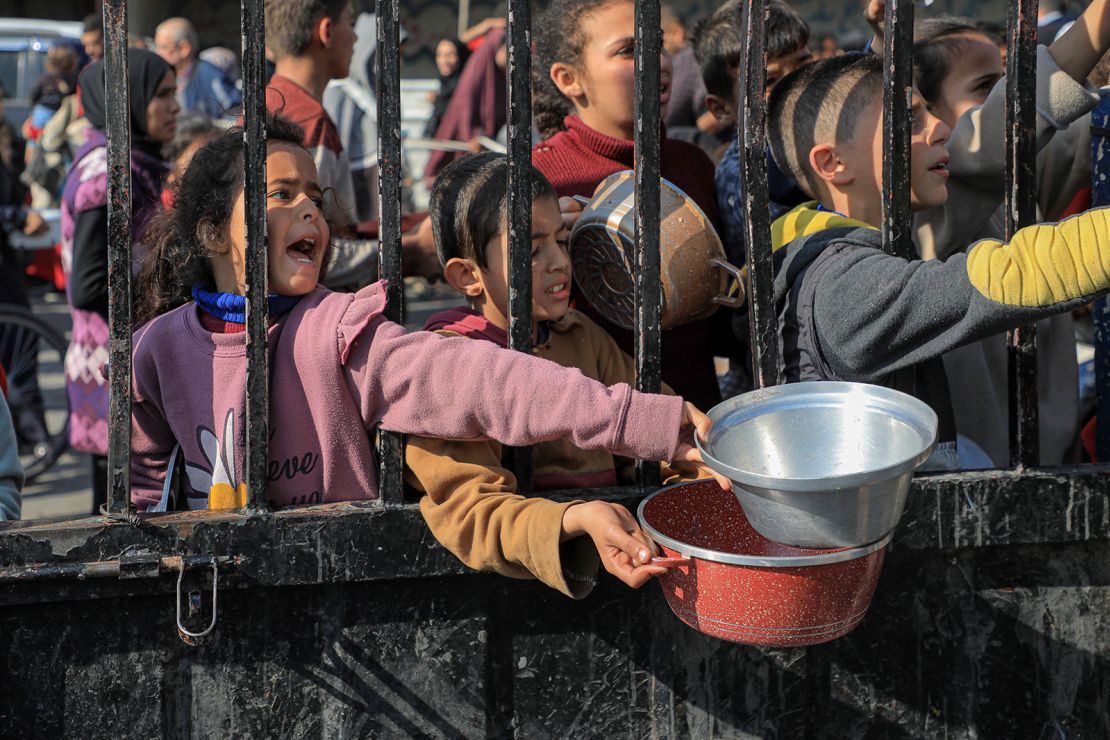
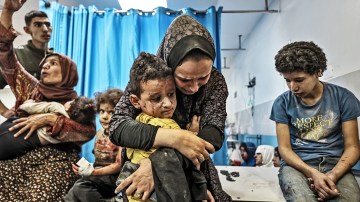
The Israel-Palestine issue continues to dominate the world’s attention today as millions of Palestinians face imminent death through bombing, sniping, disease and starvation. To date, around 30,000 Palestinians have been reported killed with close to 60,000 more injured. It is a sad time for humanity as the carnage goes on and on, with no end in sight.
Israel continues to focus on its stated goal, which is the total elimination of Hamas. Palestine, on the other hand, seeks a ceasefire from which talks can be made for a more binding and long-term peace for the region. Here lies the basic difference between the two groups. While Israel wants to ‘win the war’, Palestine aims to ‘win a respectable peace’.
Israel wants to focus on achieving a victory through an armed conflict. It wants to project strength by crushing its Palestinian neighbor. Israel believes that a strong military victory will provide the region the peace it desires, which means only on their own terms. By avenging the 7 Oct attack, Israel wants to show the world that nobody can mess around with them.
Palestine however dreams of establishing a more long-term stability, in an environment where equality reigns. Palestine wants to show its independence, and its strong national pride. Palestine wants to think long-term, with reconciliation, a sustainable peace and an equal chance at economic emancipation in the aftermath of the ongoing war. Both concepts are crucial in the complexities of the conflict and hopefully, when the time comes, in the difficult task of post-war reconstruction.
“Winning the war” refers only to a military victory and the defeat of the enemy. It involves the use of force to achieve specific military objectives. Israel’s goal in winning the war is to eliminate the immediate threat and ensure its security from further Hamas aggression.
“Winning the peace”, on the other hand, requires addressing the root causes of the conflict, promoting justice and the rule of law, and engaging efforts to eventually facilitate reconciliation and a sustainable peace. It encompasses a broad range of activities promoting more understanding, possibly including amnesty and the integration of former combatants, rebuilding damaged and destroyed infrastructure, and fostering social and economic development. The last is key: the demonstration of support for a bright economic growth for the Palestinian people.
The main difference between these concepts lies in their focus, objectives and timelines. Israel’s “Winning the war” emphasizes the use of force and military means to achieve victory, while Palestine’s “Winning the peace” emphasizes the need for comprehensive, long-term strategies to address the underlying causes of conflict in order to build a durable peace. While the former is simplistic, and can be relatively swift and decisive, it doesn’t necessarily result to a permanent peace.
“Winning the peace”, on the other hand, is a more complex, protracted process as seen in the Ireland experience. This will require patience and understanding, and the involvement of various stakeholders, from the national level to international organizations to civil society and local communities, as creative measures are undertaken to build trust and confidence, as opposed to creating an environment of fear through the demonstration of superior power. But it will be longer-lasting and more beneficial to all, not just one side.
Thus, “Winning the war” will not necessarily ensure that peace follows. One side wins the war, while the other bides its time for another try on some other day. Israel believes that dealing a devastating blow over Hamas will do the trick. Unfortunately, the heavy collateral death and destruction will make the pursuit of peace extremely difficult, if not impossible. In “winning the peace”, one side doesn’t need to win the war. Both sides must be willing to take some compromises for a higher objective which has all of mankind winning in the end. You can win the war but not win the peace. You can win the peace without having to go win a war. Ultimately, what matters most is not about winning the war, but winning the peace.
The Israel – Palestine conflict has been with us for decades. This conflict did not start only last Oct 7. It will not end magically with a wave of a magic wand. It has brought in a vicious cycle of tragedies with each one pointing to the other for having started it all. And it threatens to blow up into a much bigger global catastrophe unless the big guns in the UN put their foot down on this escalating crisis. But unless both are willing to listen, unless both are willing to see the other’s perspectives, unless both are willing to make little compromises in a long, tedious confidence-building exercise, unless both are willing to police their own ranks of extremists, there could be no end in sight for this conflict.
Cover photo courtesy of The Economist. Other pics courtesy of CNN, The Times, The New York Times.

 Color My World
Thanks for sharing. We need to band together to stop the senseless killing. This is not the way to wage a just and honorable war.
LikeLike
The harrowing plight of the Palestinians is just awful, and this is no longer a war on the terrorist few.. But genocide to innocents, herded worst than cattle, while the world watches and does nothing..
LikeLiked by 2 people
Agree with you, Sue. I used to sympathize with Israel before, but the recent events have turned me around. I do not condone terrorism, but it seems that the entire IDF has become a terrorist army now. It is heartless, it is immoral, it has to stop.
LikeLiked by 1 person
I totally agree… I think when the world gets to OPEN its eyes further it will see more behind what is occurring in that part of the world, and why this HAS TO STOP.. Thank you for your reply 🙂
LikeLiked by 1 person
Israel – and the US – may not realize it, but they are losing the sympathy of the international community big time with their continued inhuman treatment of the Palestinians. There are many peoples and countries of the world that are slowly reacting, and the US must detach from this genocidal maniac, Bibi, or he will drag the US to the depths.
LikeLiked by 1 person
Totally agree
LikeLiked by 1 person
It’s not surprising, Charley, that your political analysis is as objective and incisive as your commentary on the NBA. Thank you.
LikeLiked by 1 person
Thanks, Don. We had a similar situation with our Moslem brothers in the south before. Lost a lot of friends when we waged a merciless war on them. It only became worse when we tried ‘an eye for an eye’ on them. But when we tried a different tact, when we showed compassion, respect and understanding, we gained better results.
When I was a Battalion Commander in Central Mindanao, I still remember a young moslem boy, probably around 12, telling us after some time with us: ‘I realize now that not all soldiers are killers. And not all Christians are land-grabbers.’ That was his perception before we were able to turn him around. And no amount of military strong-arm tactics was going to change that.
God had said: ‘if he throws stones at you, throw him some bread.’ There’s a reason behind that.
LikeLiked by 1 person
Unfortunately all the destruction in Gaza is going to foster is another generation of hatred.
I mean, I would certainly hate the people who blasted my job back into the Stone Age.
LikeLiked by 1 person
Very true. If the IDF thinks they are on the right track to beat Hamas, they’re dead wrong. They’re only making matters worse with the atrocities, the abuses they are committing there.
LikeLiked by 1 person
Sad but true!
LikeLiked by 1 person
Sadly, Israel is doing to the Palestinians what Hitler did to the Jews.
LikeLiked by 1 person
so sad. This war had a huge impact on the development of the world economy. hopefully it ends quickly
LikeLiked by 1 person
With the huge damages the IDF inflicted, it will take decades before the effects of this conflict will fade. The hurt and hate inflicted will fester for a while. Israel is on the wrong side of history here, and it will see itself isolated in the years and decades to come, unless it strips itself of its hardline stand.
LikeLike