
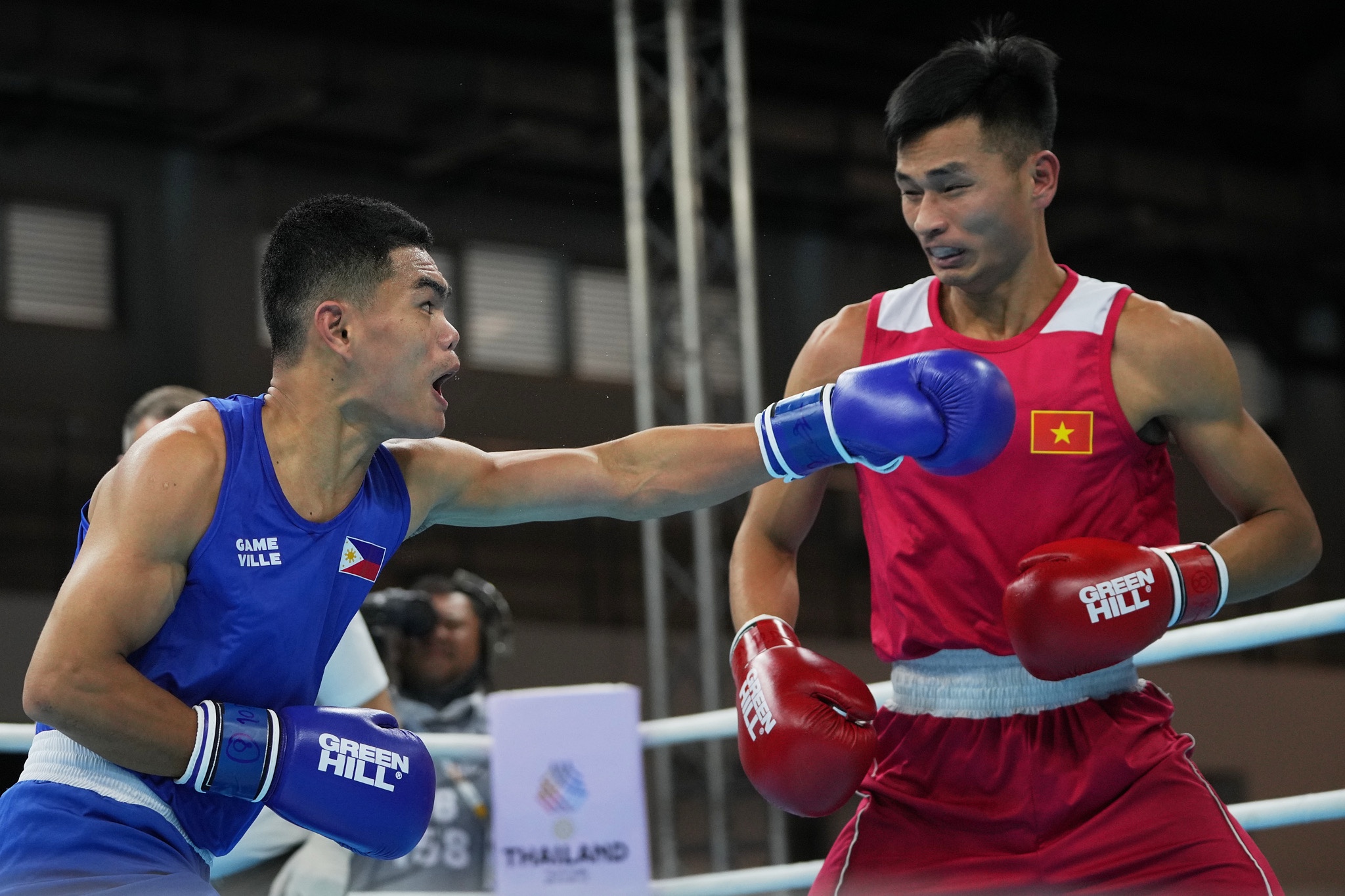
Once again, the country’s athletes are doing battle with their Southeast Asian counterparts as the 2025 SEA Games opened last December 9 in Thailand. As of today, the Philippines has garnered 17 gold, 32 silver and 68 bronze medals, good for an underachieving 6th place behind such countries as Singapore and Malaysia. Leading the pack comfortably – and as expected – is the host nation of Thailand, followed by Vietnam and Indonesia, in that order; followed by Singapore (4th) and Malaysia (5th). While our athletes have scored inspiring successes we can truly be proud of, it must also be noted that despite our large population and talent pool, it seems that we have not been able to maximize on our potential in the medal race.
Hence, it is important that we review the key factors that shape a country’s position in the overall regional sports spectacle. By promoting a strong sports culture in the country, we also promote discipline, resilience and professionalism among our youth. And this will later translate to a better leadership core in the decades ahead.
Our country’s ranking in the regional Southeast Asian Games will give us a sneak peek on the country’s future. Not just in sports, but in its overall standing in the community of nations. Our place in the regional games will reflect on the type of people we will have at the helm of our country in the decades ahead. Hence, the country’s standing should be analyzed carefully. Because it is the product of a complex mix of historical, economic, social, and logistical factors that weigh in on our people today.
And while talent and hard work among our athletes are deemed essential in our overall performance, national outcomes will also be determined by other interrelated drivers such as: a) the country’s sports infrastructure and talent acquisition program; b) the country’s economic capacity; c) our political will and governance; d) population size and talent pool; and e) our use of sports science and other technical support.
1) On investing in sport infrastructure and talent development. There is a need to provide access to modern training facilities and sports venues for the people. During the time of former PSC head Butch Ramirez, he pushed for programs to identify potential talents early. He also created a Sports Academy where these talents would be nurtured and guided properly. These facilities also handled sports science support, including nutrition and sports psychology.
2) On the country’s economic capacity and stability. The government must provide ample support via a good budget in order to sustain its national sports agenda. Private sector support and sponsorships will also help the program sustain itself over many cycles.
3) On political will and governance. Funding must not be dependent on political trends; it should have a long-term plan that will not be dependent on political favors. The selection process must be transparent in order to sustain long-term performance and public trust.
4) On the country’s population size and talent pool. A larger population size will provide a bigger talent pool, increasing the odds of discovering top athletes. Different regions can also excel in targetted sports (ie. island provinces can focus on niche sports such as swimming, diving, sailing, rowing, dragonboating, etc; high-altitude provinces can develop long-distance runners, etc.)
5) The use of sports science and other technical support. Data-driven training and injury prevention, as well as the proper use of modern sports technology will help reduce downtime and unlock peak performance potential for our athletes.
As for the quality of coaching in the country, knowledge transfer can be accelerated by hiring foreign coaches, hosting clinics and international collaborations. There is a need for a cadre of high-quality coaches who can train across generations to ensure continuity.
Sports play a significant role in society. National pride, media attention, and role modeling can influence youth participation and resource allocation. It is therefore important that sports development is emphasized in the country. The culture of sports excellence among our youth will translate into a culture of excellence in life in general, and hopefully, that is what we should inculcate in our people.
In sum, our performance in the Southeast Asian (SEA) Games must be viewed from different lenses. It is less about a single factor such as gold medals, but more about sustained, well-coordinated strategies that must combine talent development, economic support, governance, and a strong sports science backbone. What have we learned from previous Games? What have we done differently since then? What did we improve on, and what did we neglect? Some countries – Thailand and Vietnam in particular – have aligned these elements over multiple SEA Games cycles. They have sustained their lofty medal standings and overall rankings. Those with misaligned incentives or engage in short-term programs and solutions will struggle to translate potential into podium finishes. We can do better than 6th. We must do better next time.
Cover photo courtesy of Inquirer.net. Other pics courtesy of ABS-CBN, Instagram, Olympics.com, Spiker’s Turf, The Star and Sports Inquirer.






 Color My World