In February 22 to 25 of 1986, some 40 years ago, a unique, almost totally non-violent, close-to-miraculous revolution ensued in the Philippines. The historic EDSA People Power Revolution stands as a proud monument in Philippine history. It highlighted the power of non-violent resistance against an overstaying authoritarian ruler in then-President Ferdinand E. Marcos. It marked the end of Marcos’ 20-year regime, and demonstrated the profound capacity of ordinary citizens to effect change through peaceful means. For the first time in modern history, a government is toppled mainly by the sheer force of non-violent ordinary citizens. This would later become the blueprint and the source of inspiration for unarmed people all over the world who would rise up against oppression and authoritarian rule.
I was a young Army captain then, newly married, and newly assigned to Manila – at the General Headquarters of the Armed Forces of the Philippines (AFP) in Camp Aguinaldo, to be exact – after 7 years of risky field service in the hinterland areas mainly in war-torn Mindanao. Those 4 days of February would become heady days for me, my family, my relatives and friends, as we all gathered at EDSA – the epicenter of it all – in that busy portion of the highway between Camp Crame and Camp Aguinaldo.
The Prelude to EDSA
The EDSA Revolution did not emerge in a vacuum. It was the culmination of years of slow-burn discontent against the Marcos regime. Marcos declared martial law in 1972, supposedly to suppress rebellion and maintain order. However, this decree was widely contested, as many viewed it as a means to extend his rule and stifle dissent. As a lowly officer then, my thoughts were pre-occupied with more immediate survival issues in insurgent-infested Davao. This was simply way above my pay-grade, hence I just kept to myself and did my work as best I could.
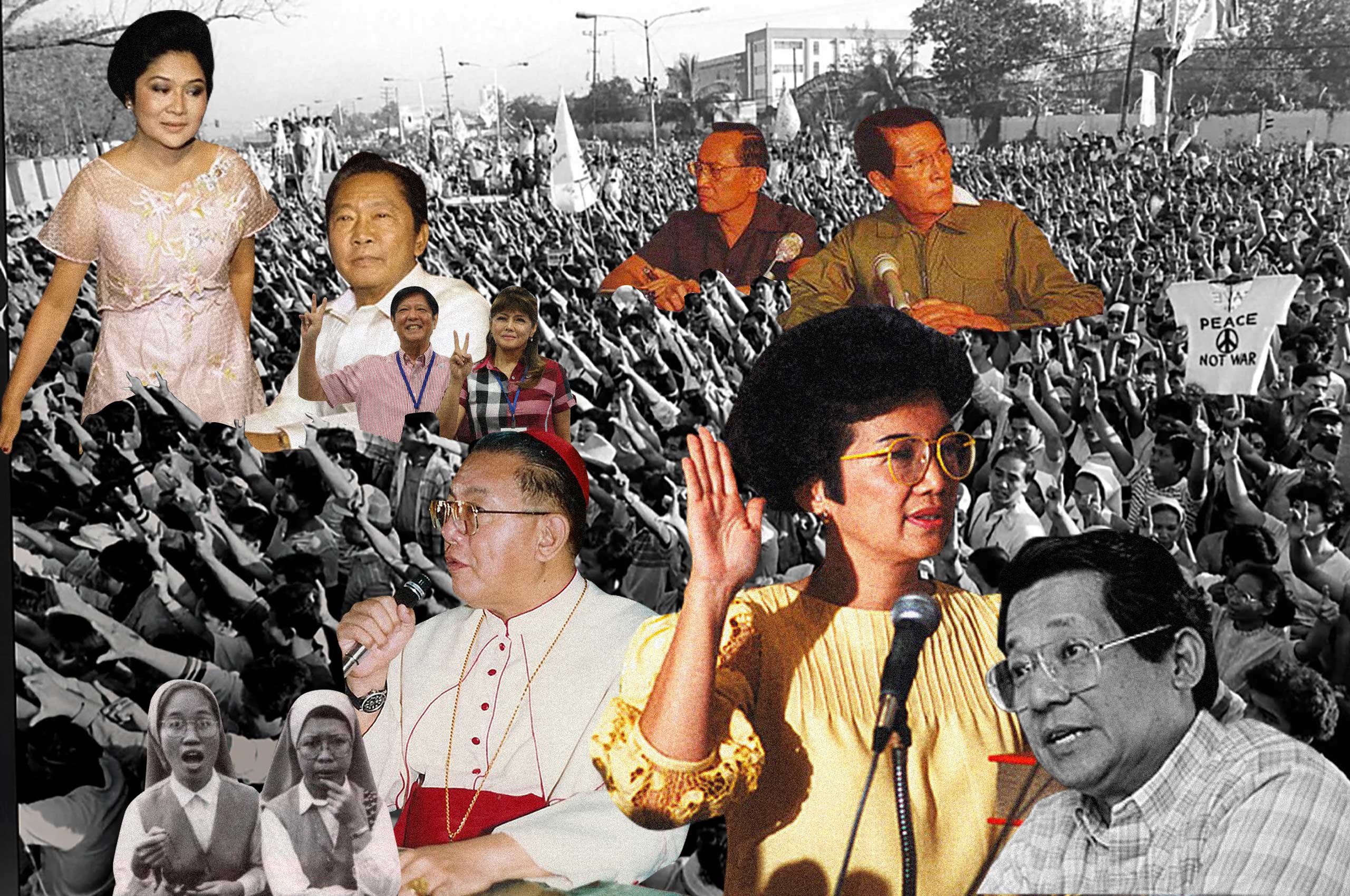
But the winds of change were starting to swirl around us. The assassination of opposition leader Ninoy Aquino Jr in 1983 acted as a huge catalyst for the growing unrest. Aquino’s death galvanized the opposition and reignited public ire against Marcos. In the years that followed, various groups – from students, religious organizations, labor unions, and middle-class citizens – would begin organizing to seek redress and demand change from the authoritarian Marcos regime. In Davao City where I was assigned in 1983, transport strikes would literally bring business in the city to a halt. To many, it seemed that the communist movement was gaining the upperhand, mainly due to Marcos’ perceived excesses and corruption. Davao, in particular, was gaining the dubious reputation as the insurgents’ urban laboratory, forcing countless families to leave – not just the province – but to leave the country itself. This was due to a growing feeling that the communist insurgents were gaining the upperhand in its war against Marcos. What was made clear then was that the insurgent war was mainly fueled by the issues against Marcos and his cronies.
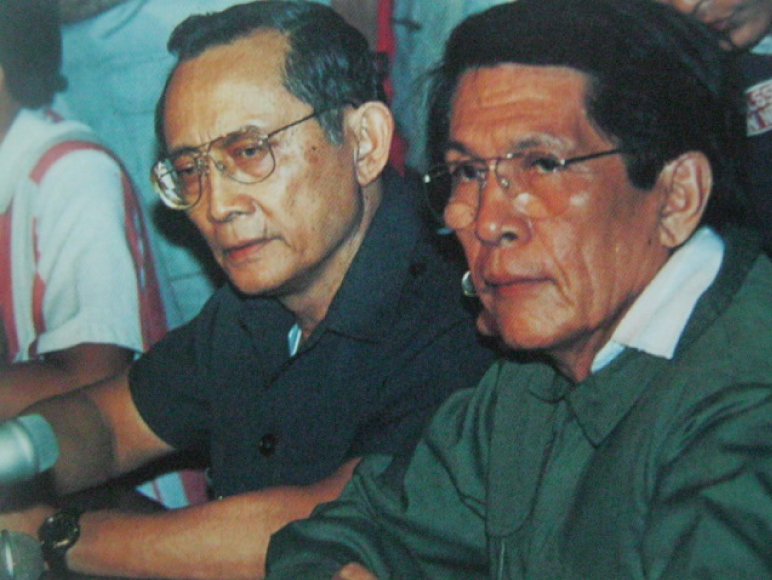
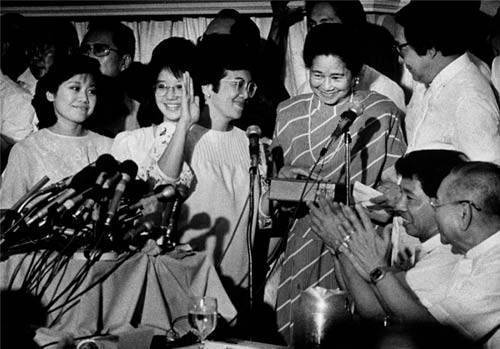
But the immediate event that triggered the EDSA Revolution was the controversial snap presidential election of February 7, 1986. Marcos claimed victory over Cory Aquino, Ninoy’s widow, in an election that was highly controversial despite the presence of numerous foreign and local observer groups. When Marcos’ victory was announced, there was much public outrage, and people mobilized to rally against the alleged cheating in the election. On February 22, 1986, Defense Minister Juan Ponce Enrile and General Fidel Ramos declared their withdrawal of support for Marcos, shocking the entire country. This pivotal moment was broadcast live, causing much confusion among the people, and igniting a wave of public support.
My Dilemma
I was relaxing at home that Saturday afternoon when my elder brother, Paul, phoned to inform me of the ongoing Enrile/Ramos presscon on TV. Opening the TV, I was shocked by the turn of events. Two of the President’s closest people – one was the Secretary of National Defense, while the other was the Chief of the Philippine Constabulary – were now cutting off their ties with him. Listening to them, I realized that this could turn violent. This could turn friends, PMA classmates, and military units against each other.
And then I thought of the RAM. I asked myself if the Reform AFP Movement (RAM) would be involved in this. RAM was a group of military officers formed in the mid-80s primarily to seek reforms in the AFP and the PC. I had never attended any meeting of the Reform AFP Movement (RAM) before. This was due to the fact that I was assigned with the Office of the Secretary Joint Staff (OSJS), directly under then Chief of Staff Gen Fabian Ver; and I thought it prudent at that time not to be involved with RAM’s activities.
However, being a military man, the first thing that came to my mind then was the balance of forces. I looked at the key units of the AFP and the then-PC/INP, which would later transition and merge into the Philippine National Police (PNP). I saw that the Enrile-Ramos forces were pitifully outnumbered and outgunned. Marcos had the elite forces in the Scout Rangers, the Marines, the Special Forces, plus the Air Force choppers, the Armor and the Artillery units, etc. They had land, air and sea superiority. My head was telling me that this DND/PC group was bound to lose.
But then, having come from the field, and witnessing first hand the people’s clamor for change, and having seen the prevailing socio-economic conditions in the countryside, my heart was telling me that change was what we needed at that time, that the excesses that were clearly visible needed to be stopped, that this was the right thing to do.
And this time, it was my heart ruling over my head.
After struggling with this serious inner conflict, I told my wife that I would be joining the Enrile Group in DND. No one asked me to go and join the group. I was not a part of RAM at all. But for some reason, I felt the need to be accounted for. Martin Luther King once said: “The ultimate measure of a man is not where he stands in moments of comfort and convenience, but where he stands in times of challenge and controversy.” This was not a time to fence-sit, it was a time to stand for what you feel is right.
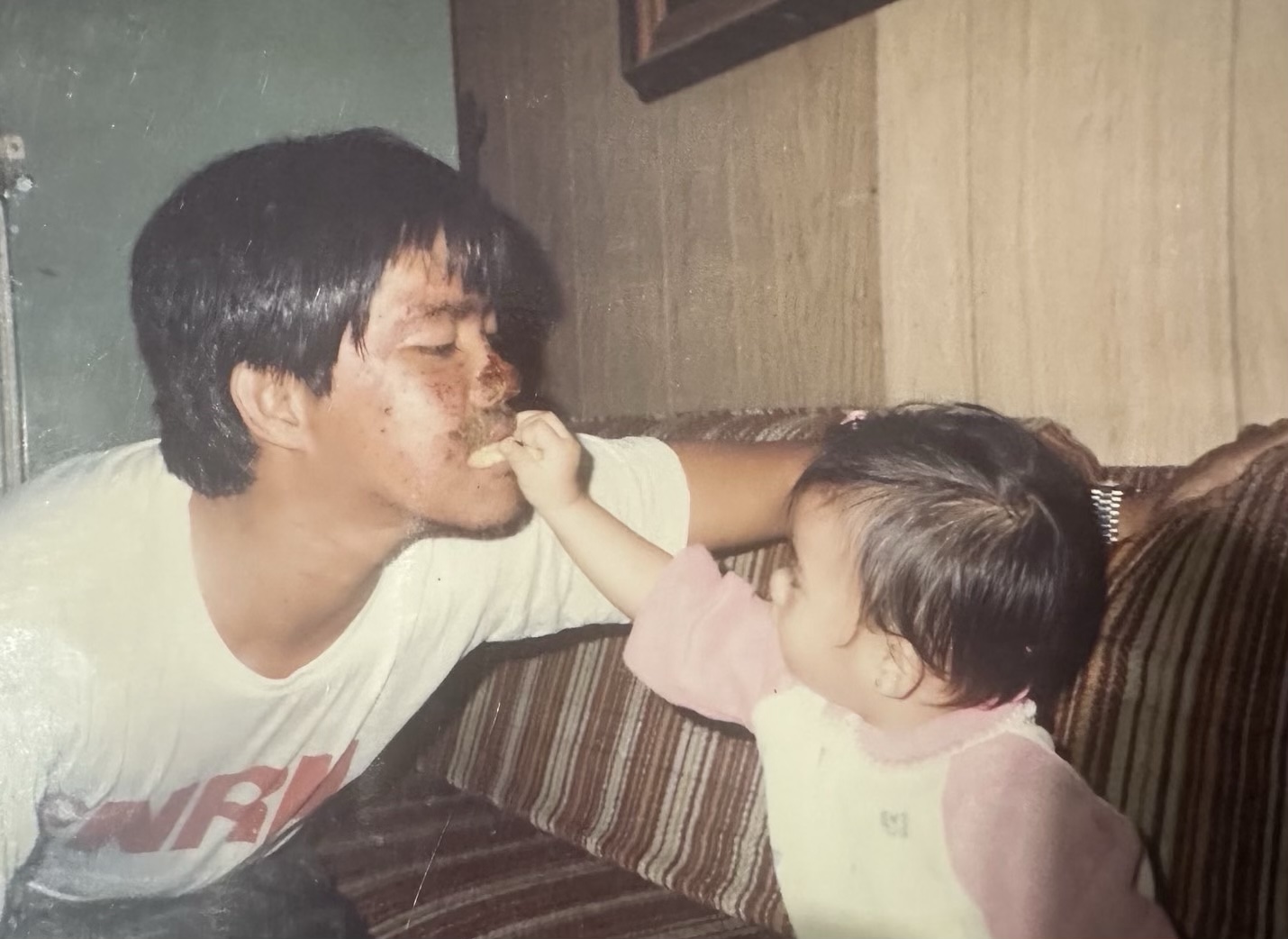
Being accustomed with my work in the field prior to my assignment in Manila, my wife calmly prepared some of my stuff, even as I arranged for my brother, Paul, to bring me to Camp Aguinaldo early the following morning. That night, I looked anxiously at my 1-year old baby girl as she tried to cheer me up with her unsteady first steps. And I wondered if I would ever see her grow up. Or if I would be able to come back to my family again. That night, I prayed hard for more discernment, for more wisdom; that I may make the right decision in this crucial episode in my life.
Joining the Rebel Group
My brother, Paul, brought me to the now-closed gates of Camp Aguinaldo early that following day, Feb 23. It was a bright sunny Sunday and while the Edsa highway was still seemingly deserted, there was an almost tangible anticipation of trouble up ahead. Before parting with Paul, I asked him to take care of my family, if ever something wrong was to happen to me. And I asked for prayers, for his support, and that of his network of friends as well, because that was what we needed at that time.
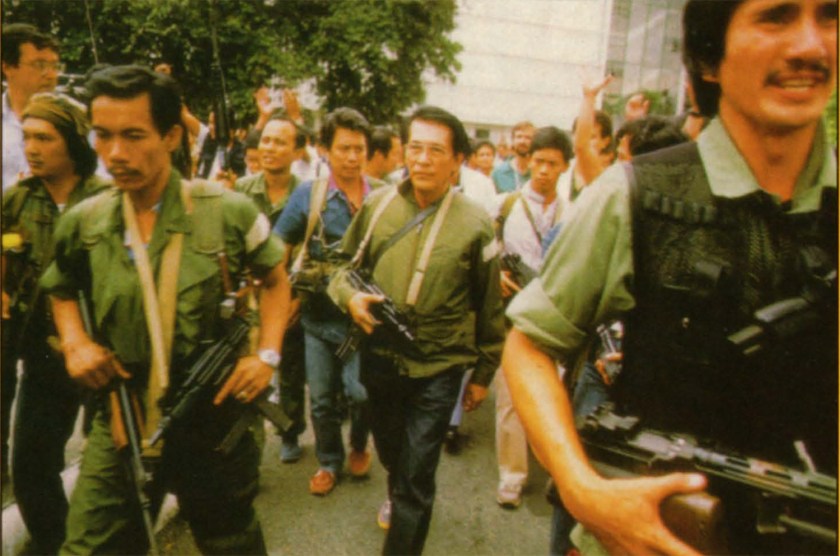
Despite it being a Sunday, everyone was in the office that morning as red alert had been declared. At around 7am, while everyone was busy doing their assigned tasks, I stood up and announced that I was joining the DND group. I even had the audacity to ask if there was anyone who would like to join me. But this office being directly under the then-Chief Of Staff, Gen Fabian Ver, it was clear that nobody would sympathize with the rebel group. With their dagger eyes all trained at me, I left the room as fast as I could before they could take action. I left GHQ building, jumped over some concertina wire that was now ringed around the DND building. I could hear Marcos loyalist troops shouting at me. Thankfully, no shots were fired. Col Gringo Honasan, and his classmate, Col Rey Rivera, one of our Tactical Officers in the Academy before, were there to welcome me. I was one of the very first officers to have joined them. I was also warmly welcomed by my PMA classmates there, Capts Phil Plaza and Pompeo Limbo, both of whom were assigned with the DND. They provided me with a sterling rifle, as I only had my handy government-issued pistol with me that time.
Transferring from Cp Aguinaldo to Cp Crame
By mid-afternoon, it was clear that DND was in an untenable position. DND was surrounded by units loyal to Marcos. It could be easily assaulted and overrun if the Marines or other loyalist combat forces were able to enter GHQ through its many backdoor gates. Hence it was decided that we transfer to Camp Crame to consolidate forces with Gen Ramos and the PC/INP as soon as possible.
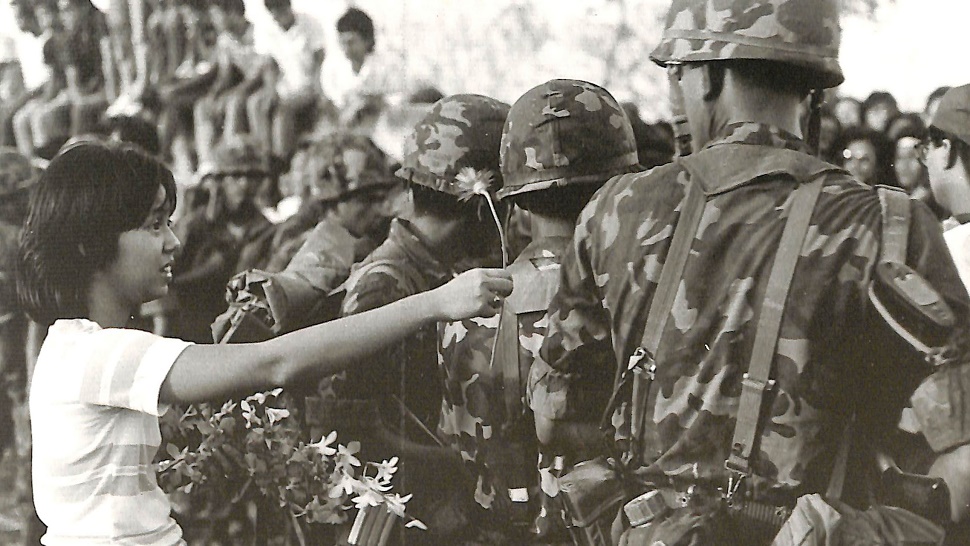
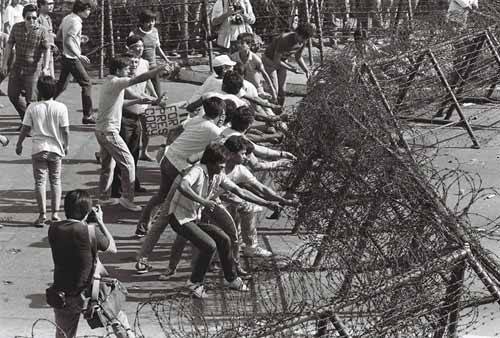
That afternoon, we marched down the road leading to the Camp Aguinaldo’s Edsa gate. It was there that I found myself close to tears. There at the gates were thousands of people cheering, expressing their support for us. It was such a heady feeling for me, having come from Davao where communist propagandists had been successful in maligning our soldiers and branding the military as the bad guys. This time, the people were for us! I still have goosebumps recalling the scene, and I remember telling myself: “This is how it should be. This is what true service is all about, when the people you serve look up to you as their protectors.” Now more than ever, I was convinced that my decision to join the Enrile-Ramos group was the right thing to do.
Having crossed Edsa for Camp Crame, I saw another PMA classmate, Rolly Sacramento. Since we didn’t belong to any unit, he being from the Air Force, we decided to attach ourselves with a PNP classmate assigned in Camp Crame, Raul Castaneda. Raul was a close friend who was regarded as one of the influential leaders of our class. He was then under the Criminal Investigation and Detection Group (CIDG) under then Col Rex Piad. Col Piad would gladly welcome us to his unit.
People Power Grows
There being no cellphones at that time, it was time to man the land phones and try to call as many military friends as possible to beef up our forces. Our families were mobilized as well. Together with the families of their friends. And that of the friends of their friends. Two other Boholano officers would join me in Crame: then PNP Lt Johnny Torralba and the late Marine Lt Rollie Cal. We had formed a close Boholano group together and they were among the first to heed my call.
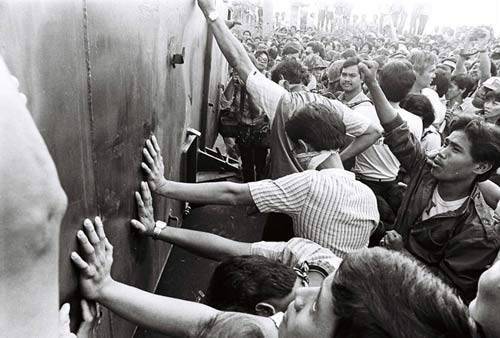
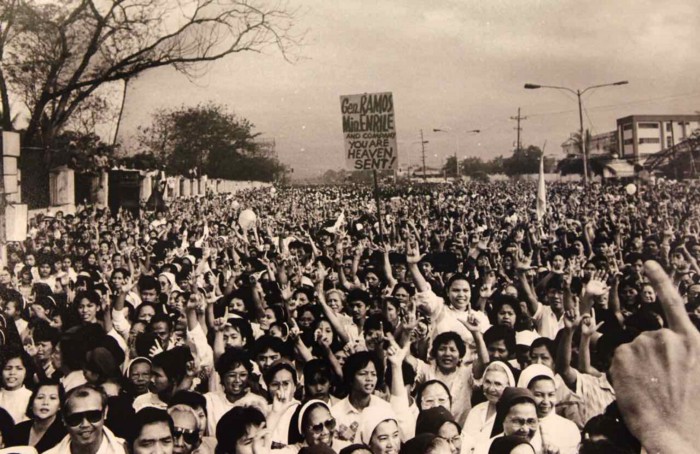
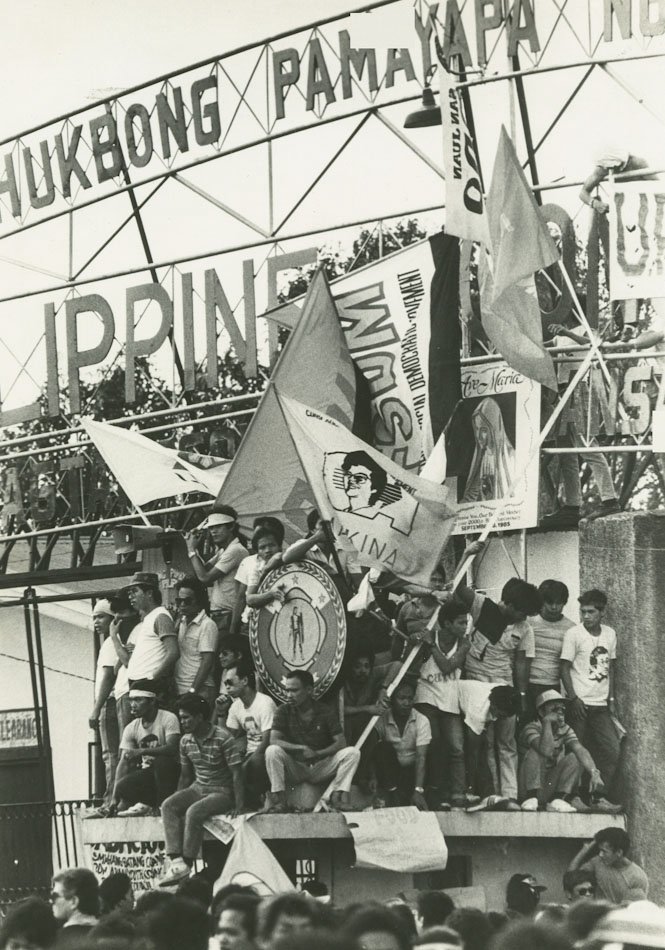
Outside, people from all walks of life started to flock to EDSA to show their support for us and to stage a peaceful assembly urging Marcos to step down. That night, it was rumored that loyalist forces were now positioning to surround Camp Crame. We started to prepare for any possible eventuality. We also started coming up with contingency plans in the likely event Crame fell to the loyalists. We even brainstormed a worst case scenario, in the event that there was an actual violent assault on the camp. Our small group under Col Piad decided that whoever would survive the assault would continue an urban warfare type of campaign against the Marcos regime. In preparation for this, we started to smuggle weapons to Rollie’s place a few blocks from the camp.
The Tide Turns
On the morning of Feb 25, we braced for the attack. Armor elements had been monitored in strategic areas a mile or so in every direction from Crame. We were then informed that the Air Force choppers were now flying, on their way to bomb Camp Crame. We bade each one good luck, said our prayers and braced for the attack, as the noise from the choppers started to get louder and louder. However, instead of firing shots at Crame, the choppers proceeded to land – at 6am – at Crame’s parade ground! There was jubilation, there was wild cheering, there were tears of joy as we realized that the chopper pilots were not attacking, but were instead defecting to join us. Led by then Col Tony Sotelo, the defection of the Air Force choppers would tilt the balance of power significantly. This was a huge game-changer, as this would give us greater offensive capability against the loyalists.
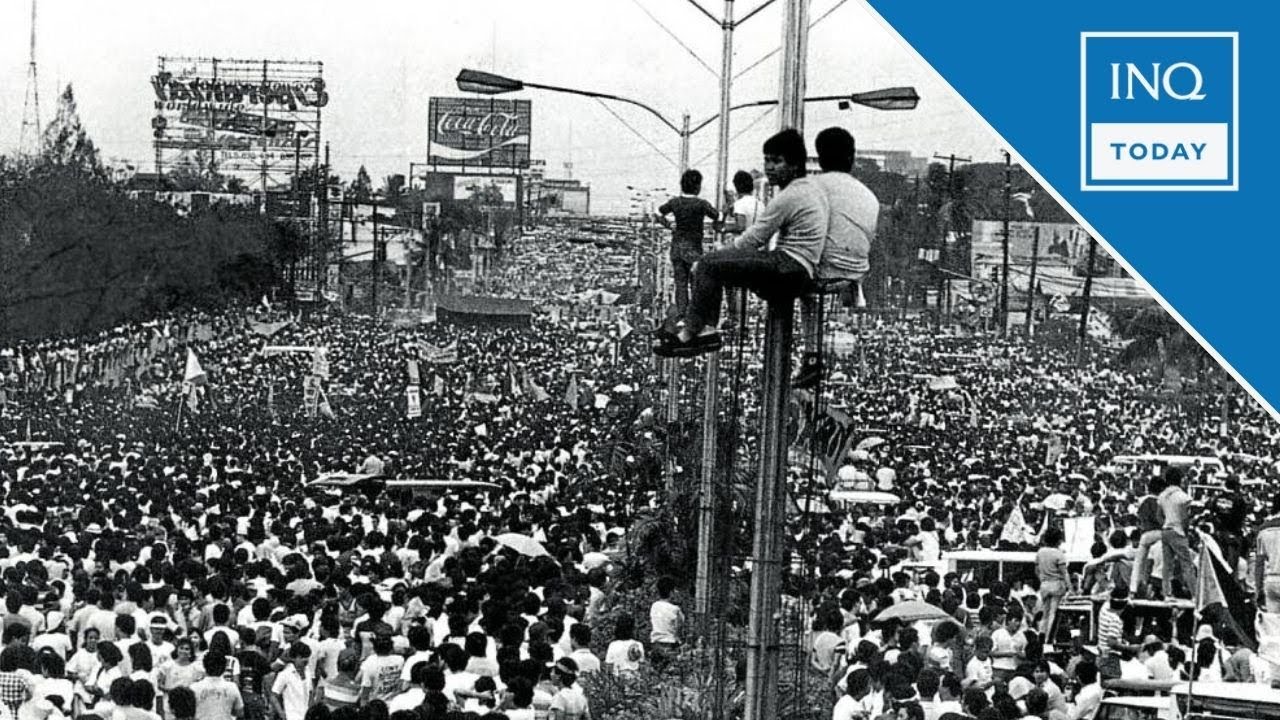
And then came another big bombshell. It was announced that Marcos had left the country at 6:30am. Pandemonium broke loose as the gates of Crame were opened. Rebel forces swelled as hundreds of AFP officers raced to Crame to report to Enrile and Ramos. It seemed like a mad dash to get the juiciest positions in the AFP. Alas, by 9am, a new announcement was made to debunk the rumored Marcos flight. Marcos then appeared on TV, to show to the world that he was still holding court as the President of the country. During his presscon, Marcos would be seen disapproving Gen Ver’s emotional recommendation to use force on the Edsa crowd. With hundreds of thousands of people in EDSA, that would have been a massacre. With the announcement, the Crame gates were closed once again, and all civilians were asked to vacate the camp. We were nowhere near the resolution of the crisis. But the rebel forces had grown exponentially as a result of the false alarm. Senior military officials who had reported to the Enrile/Ramos camp had nowhere else to go, but to stay with the rebel group.
Unknown to most, the Marines had been able to slip into Camp Aguinaldo while the people in EDSA rejoiced. They would preposition their artillery assets near the GHQ grandstand, even as a carnival atmosphere had taken over EDSA. The Marines were reportedly ordered to open fire to disperse the crowd. But the Marines refused to fire their weapons as a huge number of civilians would have been killed if the artillery unit had fired their guns.
It was all downhill after that. Cory Aquino would be proclaimed President at Club Filipino near Crame at 10 am of 25 Feb. Marcos would have his own inauguration at 11 am. But the coverage to his inauguration was cut short as rebel forces took control of the government’s TV station, MBS 4. One of my mistahs with DND, Phil Plaza, would get injured in the take-over of the station. With the station seized, the crowd at EDSA got even bigger and bolder. With the crowd now reaching millions, it would be close to impossible to attack Crame without causing so much civilian casualties.
The Turn-over in Malacanang
By midnight of 26 Feb, Marcos would board a chopper bound for Clark. From there, he would take a C-130 with his family for Hawaii. Meanwhile, we got ready for the turn-over of Malacanang. By 7am the following day, I joined a group that boarded some trucks to secure Malacanang and effect a proper turn-over and inventory from the Presidential Security Command (PSC). There, I met then Capt Andy Caro, an esteemed upperclassman in PMA who was now leading the loyalist troops still securing Malacanang. He and his men would be helpful in the peaceful transition from the Marcos group to the Cory group.
I remember the distinct smell of hospital air when I entered President Marcos’ austere room. I remember lying down on his bed, trying to get a feel of how it must have been to be President. I remember the First Lady’s room. The fragrance of countless spilled perfume wafting in the air. Earlier, a mob of people had been able breach the Malacanang grounds before the PSC troops were able to regain order. The mob had entered many of the rooms in Malacanang, hence many of the rooms were in such disarray. The blast of perfume air was simply so overpowering as we opened the door to the First Lady’s room.
And I remember going to the kitchen as we hadn’t had breakfast yet. There was nothing left in the fridge except for something that resembled papaya seeds. The lone kitchen guy there prepared some rice plus this dish which looked weird to me. He told us that what we were eating there was some hi-grade caviar. That was my first and only time to have tasted caviar. Caviar with rice, that sounded weird. But for hungry guys like us, that would suffice.
Going Home
Returning back to Crame, I saw everyone preparing for the impending changes in the AFP and PC leadership. The DND guys started packing up for a return to Cp Aguinaldo. Col Honasan offered me a spot in DND, but I respectfully declined his offer, stating that I believed I would be needed more in OSJS with a massive change-over to be effected there soon. Instead, I asked him to accommodate the 2 Boholano officers who joined us then, Lts Cal and Torralba. My request granted, I was ready to go home.
That night, going home became another memorable experience for me. It marked the first time I went home in Army fatigues. Prior to that, very few people in our neighborhood knew that I was a soldier. Having come from Davao, where the state of urban insurgency was far advanced, I had made it a point to keep my identity under wraps. My uniform was in the office in Camp Aguinaldo, and I kept a low profile in the neighborhood. After Edsa however, I felt that soldiers were now no longer seen as mere Marcos lackeys and oppressors of the people, but as fellow citizens and partners – as the true protectors of the land – providing noble service to our country and people. Hence, it felt so good for me to be coming home finally in proud Army fatigues.
Epilogue
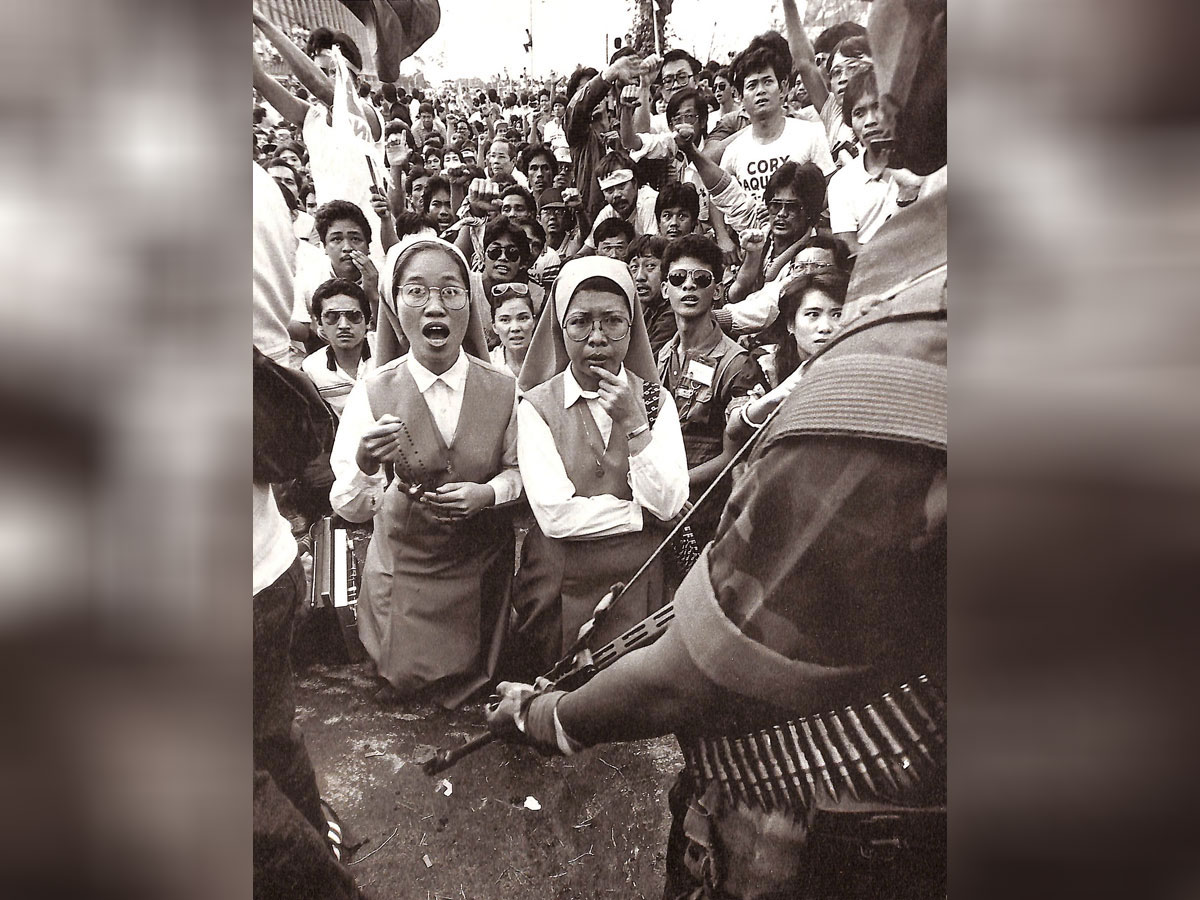
The EDSA Revolution will always hold a special place in my heart. It brought about the end of the authoritarian regime of Marcos. And its legacy still resonates far beyond the shores of the Philippines, inspiring movements worldwide to pursue reforms, pushing for justice and democracy through non-violent means. The EDSA Revolution is not just a proud chapter in Philippine history; it would pioneer a new approach to combatting tyranny. And it would become a beacon of hope for oppressed people all over the world, telling us that the ways of unity and peace – symbolized by nuns and the laymen armed only with rosaries and prayers, pitted against tanks, cannons and other lethal weapons – will always take the higher moral ground.
As we celebrate the EDSA Revolution’s 40th Anniversary, I wish to honor those who sacrificed for freedom not only in Edsa, but even prior to the events of Feb 1986. And I wish to remind the generations to come that the ways of courageous, peaceful collective action are never outdated. It can redefine a nation’s future, and it will always be a unifying cry for freedom. Let us remain steadfast in defending the hard-won rights we cherish, and let us stay ever-vigilant against the subtle distortions and the creeping attempts that threaten our democracy.
Cover pic courtsy of Positively Filipino. Other pics courtesy of Central Philippines University, ABS-CBN, Rolling Stones Philippines, Esquire Philippines, OneNews.ph, PhilStar, Ayala Museum, GMA News Online, Tapatalk and Phil Plaza. For a closer look, just click on the pics. Video courtesy of Jescom TV.
A song to remember: [https://www.youtube.com/watch?v=NjzhC9iX-ZQ]
 Color My World
It is good to remember. Thank you for giving our country a chance at the risk of your safety and life.
LikeLiked by 1 person
Thank you too for appreciating. It feels good to know that people still are grateful for the efforts we collectively made decades ago.
LikeLike
Charly, thanks so much for this riveting personal historical account. While some might have read accounts in history books, it would not have the personal touch such as you leaving your wife and child to fight for freedom.
And the message as you point out is particularly important today all over the globe when long-established democratic institutions cannot be taken for granted. Bless you, my friend.
LikeLiked by 1 person
Thanks mucho, Don. Those were indeed – as the chinese say – very interesting times.
LikeLike
Thank you for writing this, Tito. The writing is great, but the man behind it, greater. And critical that your experience is put on record. Cheers.
LikeLiked by 1 person
Gian!!! I miss you, man! Thanks for the kind words! Truly appreciate it.
LikeLiked by 1 person
Thank you for your service…
LikeLiked by 1 person
My eternal gratitude to Raul as well, Ray. He provided us succor during those difficult times.
LikeLike