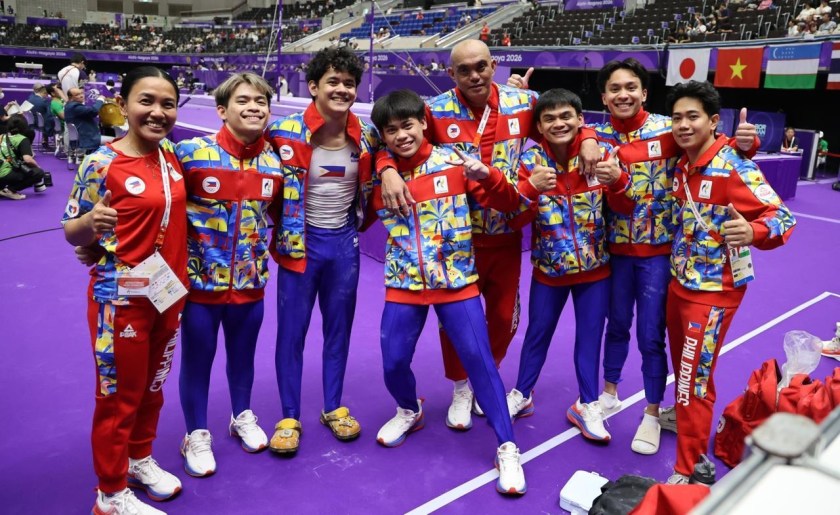
As the 20th Asian Games unfold in scenic Nagoya, Japan, the Philippine delegation finds itself in a familiar, yet difficult position. With the continental multi-sport event now in full swing, all eyes are fixed on the medal tally, gauging whether this year’s contingent can finally shatter a glass ceiling of 4 golds set in the 2002, 2018 and 2022 editions of the Asian Games.
As of this release, the Philippines sits in 17th spot in the overall rankings. The current haul stands at 14 medals: with two golds, two silvers, and ten bronzes. The two golds have both come from Carlos Yulo, who successfully defended the country’s hopes in gymnastics by winning the men’s floor exercise and vault. Jean Claude Saclag added silver in MMA, while Gilas Pilipinas Women won silver in the 3×3 basketball competition.
The medal tally is particularly interesting when placed against our recent Asian Games history:
| Year / Host | Gold | Silver | Bronze | Total | Rank |
|---|---|---|---|---|---|
| 2002 Korea | 3 | 7 | 16 | 26 | 18th |
| 2006 Qatar | 4 | 6 | 9 | 19 | 18th |
| 2010 China | 3 | 4 | 9 | 16 | 19th |
| 2014 Korea | 1 | 3 | 11 | 15 | 22nd |
| 2018 Indonesia | 4 | 2 | 15 | 21 | 19th |
| 2022 China | 4 | 2 | 12 | 18 | 17th |
| 2026 Japan (ongoing) | 2 | 2 | 10 | 14 | 17th |
The table reveals something quite significant. Our medal totals have not consistently increased. In fact, the 26 medals won in Busan, Korea in 2002 remain higher than our totals in every completed Games since then. What has changed is the composition of our success.
The 2014 performance was particularly painful: only one gold, three silver and 11 bronze medals, good for 22nd place. Since then, however, the Philippines has recovered to four golds in both 2018 and 2022, while finishing 19th and 17th respectively.
The Philippines’ campaign in this year’s Asian Games offers a curious mix of optimism and caution. While the atmosphere in the Philippine camp remains upbeat, the road to their ambitious pre-tournament goal of 8 golds seem to get more difficult with the remaining competition days.
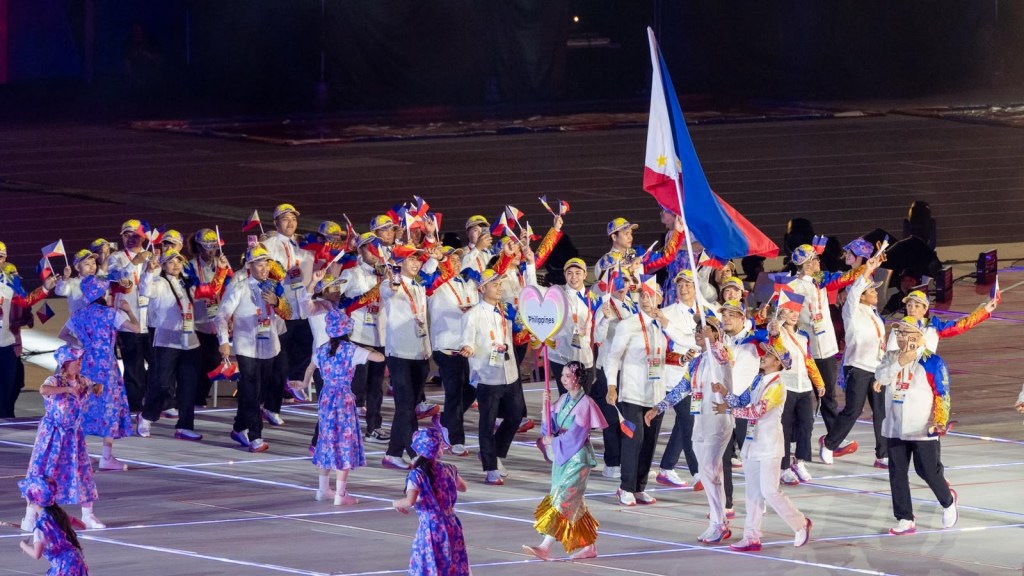
But there is certainly evidence of improvement, though it is still too early to say if Philippine sports has turned a corner. The encouraging part is that we are producing medals in more sports and have already reached the 10th to 20th place threshold in Japan. The past 2 editions, we famously registered wins in weightlifting and boxing. This year, pole vault, gymnastics, women’s tennis and our consistent contributor – boxing – seem to be the country’s highlights. The bigger question is whether we can turn isolated breakthroughs into a deeper, sustainable pipeline of Asian-level athletes.
Being around 10th to 20th with only two golds is partly a function of the competition’s stage and the number of medals already decided. Nevertheless, it demonstrates that the Philippines can occupy a much higher position when its athletes convert opportunities into medals. More importantly, the current medals are coming from a wider range of sports disciplines, including gymnastics, MMA, basketball, karate, soft tennis, weightlifting and esports.
But this is precisely where we need to look beyond the medal table. The country cannot build a strong internationally-competitive sports program simply by discovering a few exceptional athletes and supporting them heavily when they have reached the ‘elite’ level. We need to create a pipeline. And this pipeline has to discover, then develop, then compete, then specialize, in order to reach international standards.
That means finding talented children not only in Manila and the major cities, but in the provinces. It means producing properly-trained and competent coaches at the grassroots level, building accessible facilities, and developing sports science, nutrition, competition exposure and a system that allows promising youngsters to remain in sports while pursuing a proper education.
This is where the Philippine Sports Commission’s grassroots programs become critical. The PSC’s National Sports Development Plan already recognizes two complementary pillars: grassroots development and high-level sports development. Its grassroots programs include Batang Pinoy, the Philippine National Games, sports clinics, coach development and regional training centers; while the high-performance side provides elite athletes with training, facilities, foreign coaching and international exposure.
The missing ingredient is not necessarily another program. It is continuity and connectivity between the programs.
Batang Pinoy should not simply be a competition where young athletes win medals and then disappear. A promising 12-year-old swimmer, gymnast, boxer, archer or weightlifter should enter a national database and be monitored for years. Coaches should know where that athlete is going next. Regional competitions should feed national competitions; national competitions should feed national teams; and national teams should have a pathway toward Asian and Olympic competition.
The Philippine National Games was conceived precisely to help create such a pool of athletes for international competition.
And perhaps this is the most important lesson from Japan. We should not measure Philippine sports development only by how many medals we win in the Asian Games. We should measure it by how many young Filipinos are entering the system, how many are progressing, how many are reaching international standards, and how many are being produced consistently across different sports.
If we can build that system, yesterday’s Hidelyn Diaz and today’s Carlos Yulo need not remain the extraordinary exceptions. They can become the inspiration that will translate to a much larger generation of disciplined athletes and law-abiding citizens who can make the country proud.
And that, ultimately, is how the Philippines can move from a mere occasional Asian Games success to become a consistent member among Asia’s elite sporting nations.
Cover pic courtesy of GMA Network. Other photo courtesy of Inquirer.net.

