28th of ‘My Story’ Series
My assignment with the Office of the Vice President (OVP) had brought me back from the mountains of Mindanao to the urban jungles of Metro Manila. I thought I had already seen enough of the complexities of government in my years in uniform. I was soon to discover that the political world had its own battles—and that many of them were fought without guns.
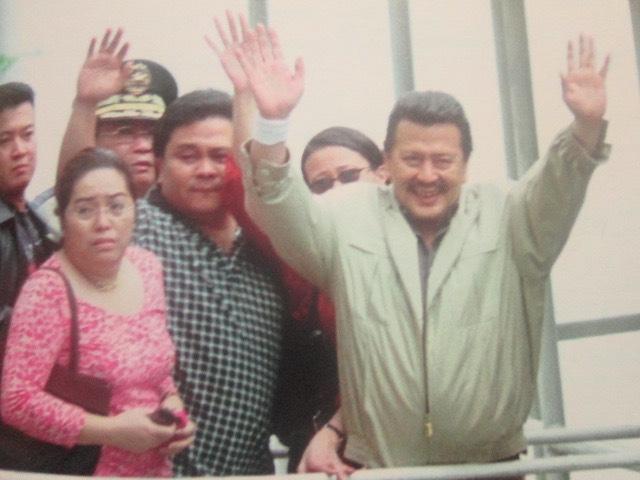
By late 2000, the political situation in the country had become increasingly troubled. Reports of massive corruption and questionable deals in government were becoming more widespread. There was also a growing perception that President Joseph Estrada was not responding to the problems confronting the country with the seriousness and urgency expected of the presidency.
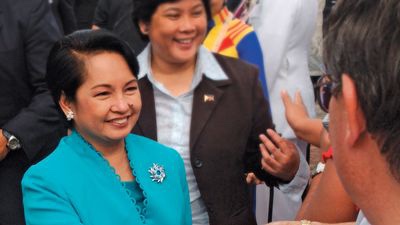
We were in Istanbul, Turkey, when Vice President Gloria Macapagal-Arroyo eventually cut ties with the administration and resigned as Secretary of the Department of Social Welfare and Development (DSWD). Calls for President Estrada to step down began to mount. The impeachment proceedings that followed would bring the growing political crisis into the open.
Once GMA decided to leave her Cabinet post and take a more active stand against the administration, I knew her security requirements would change dramatically as well. Hence, upon reaching Rome after our flight from Istanbul, I asked permission to fly back to Manila ahead of her to prepare a more appropriate security arrangement for her return.
My own role was beginning to change as well. Colonel Delfin Bangit, my classmate who had earlier left for senior-officer schooling in Australia, was now back from his training stint. With his return, our functions could be divided to make them lighter. Del would resume his role as Senior Aide and Security Officer to the Vice President, while I would assume the role of OVP Liaison to the Armed Forces of the Philippines (AFP).
Incidentally, layas is the vernacular for wandering around. The job of liaison would suit me perfectly. I was now free to roam around, talking to AFP personnel in Metro Manila and elsewhere in the country.
This arrangement brought me into contact with people and units throughout the Armed Forces, as well as other uniformed services. I began making the rounds, talking to commanders, staff officers and enlisted personnel, listening more than speaking, and trying to get a feel for what was happening inside their respective organizations.
It was delicate work, and it could easily be misunderstood. I was not going around telling soldiers what to do. I was simply trying to understand what they were thinking. The important message GMA wanted to convey was that she was not the enemy and that she was working for the welfare of the country and its people.
However, in the highly charged atmosphere of those days, my mere presence could be interpreted in different ways. Before long, word went around that I was doing a “psyops job” against the government.
The issue came to a head when the National Security Adviser, retired General Alex Aguirre, accused me during a press conference of agitating for President Estrada’s removal. Suddenly, I became a pariah in the military establishment. Walking the halls of GHQ, I would see officers make a sharp U-turn whenever they spotted me. People who had known me for years suddenly became wary of being seen with me. Others, including classmates, tried to avoid me altogether.
Having spent much of my career as a field commander building relationships based on trust and credibility, this was a difficult and painful experience. This was one of those times when I felt the pain of being treated like an outcast.
I remember Fr. Archie Intengan, the renowned Jesuit priest and social activist, calling to offer me a safe haven should the situation become too hot to handle. He would extend the same offer to my buddy, then Colonel Boogie Mendoza, a PMA classmate assigned to the Philippine National Police (PNP), when police authorities began putting similar pressure on him. Those gestures of friendship meant the world to us.
It was providential that my family was in the United States during that period. My wife, Wit, had been sent there to lead Jollibee’s expansion into the American market. She had insisted on bringing the entire family with her. Their absence was difficult emotionally, but it also gave me a certain freedom of movement. I could go about my work without constantly worrying that my activities might place them in danger.
By January 2001, events began moving with astonishing speed. The impeachment trial of President Estrada had reached a critical point. On January 16, eleven senator-judges voted against opening the second envelope, which prosecutors believed contained potentially damaging evidence. The prosecution panel walked out in protest, and the impeachment proceedings were effectively brought to a halt. The reaction outside the Senate was immediate.
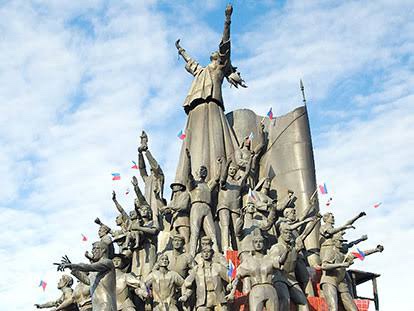
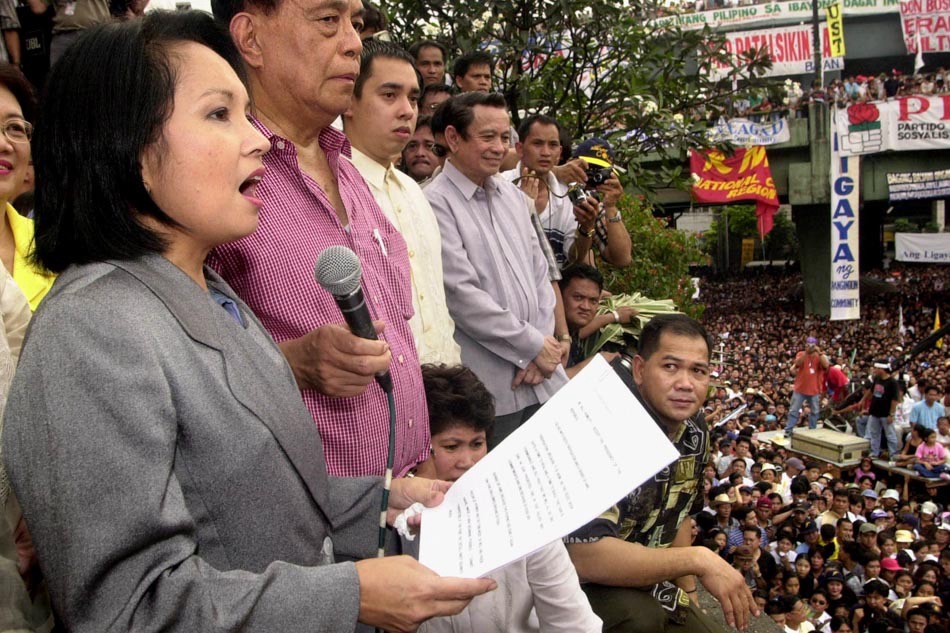
People began gathering at the EDSA Shrine. What started as a protest soon grew into something much larger. From January 17 onward, the crowds at EDSA continued to swell. The atmosphere became increasingly charged. The country seemed to be holding its breath.
While people were gathering in the streets, I was doing something much less visible. I continued listening and talking to people. Once again, as in EDSA I, people were trying to determine which key units and commanders were aligned with the pro- and anti-administration camps.
Who was prepared to stand with President Estrada? Who was beginning to lose confidence in his leadership? Who would remain neutral? How would the Armed Forces react if the situation deteriorated further?
These were difficult questions to ask, and even more difficult ones to answer. Inside the military and police organizations, loyalties were being tested. The situation was changing by the hour, and more and more people were gathering at the EDSA Shrine to show their support for the Vice President.
By January 19, it was becoming clear that the situation had reached a decisive point. That day, the AFP leadership, led by Chief of Staff General Angelo Reyes, went to EDSA and announced its withdrawal of support for President Estrada. This was a turning point in the unfolding crisis.
The Supreme Court would later recognize the withdrawal of support by Defense Secretary Orlando Mercado, General Reyes and the service commanders, followed by the PNP leadership under Director General Panfilo Lacson and other officials, as among the critical events leading to the collapse of Estrada’s government.
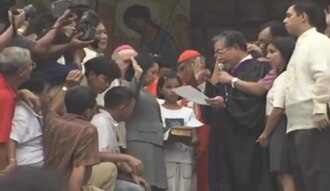
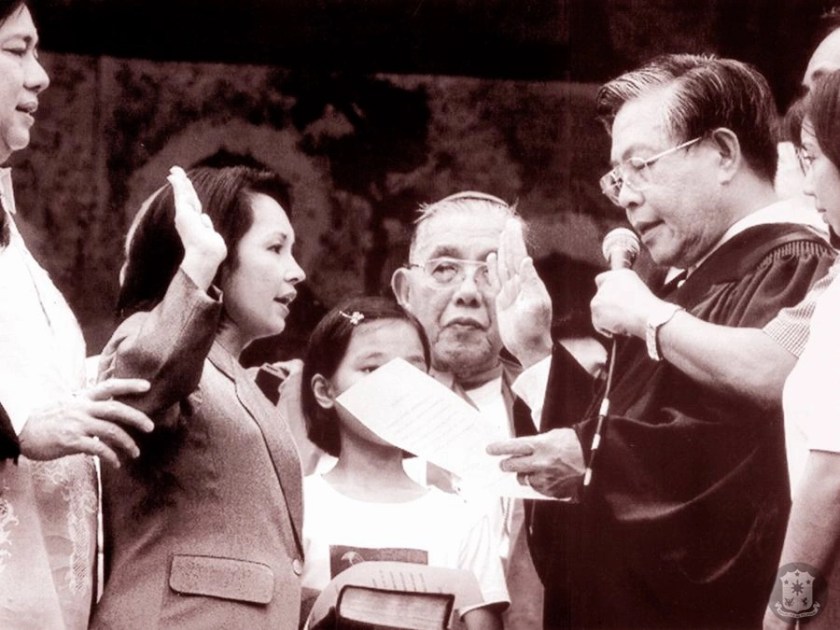
The following day, January 20, 2001, Vice President Gloria Macapagal-Arroyo took her oath as President before Chief Justice Hilario Davide Jr. at the EDSA Shrine. President Estrada subsequently left Malacañang. The Supreme Court would later uphold GMA’s succession, although the circumstances surrounding Estrada’s departure remained the subject of political and constitutional debate.
For me, however, there was another assignment.
I was part of a five-man team led by then Justice Renato Corona, tasked by President Arroyo to proceed to Malacañang and facilitate the peaceful turnover of the Palace. My task was to ensure that the Presidential Security Group (PSG) remained steadfast amid the leadership change and to assure its personnel that there would be no massive revamp within the unit.
As I prepared to leave, I could not help but feel a strange sense of déjà vu.
I had been there before.
Fifteen years earlier, during EDSA I, I had been part of the military contingent sent to effect the turnover of Malacañang. (Please read Remembering EDSA I – My Story. Just click on the title.) Now, in 2001, I was returning for essentially the same purpose, but under an entirely different set of circumstances.
The same Palace. The same objective: a peaceful turnover. But a different generation of political upheaval.
As we entered Malacañang, I was struck by how history can sometimes bring a person back to the same place, even after taking him through an entirely different journey.
In EDSA I, I had been a young officer witnessing the end of one political era. In EDSA II, I was older and more experienced. I had come to realize that the machinery of government was driven not only by orders and authority, but also by trust, relationships, perceptions and, ultimately, the will of the people—and the willingness of others to follow their leaders.
The turnover was peaceful. Waiting to brief me on the PSG were Colonel Pete Cadungog, the group’s Vice Commander and a member of PMA Class 1975, and Lieutenant Colonel Rey Sealana, my mistah and the PSG Chief of Staff. We agreed that we would all work toward an orderly and uneventful turnover.
That, to me, was the important thing. Whatever one’s political views may have been about the events of those days, the country had gone through another extraordinary transfer of power without the kind of violence that could easily have erupted from such a confrontation.
For me personally, there was an unusual footnote to that chapter of my life. I had been involved in both successful turnovers of Malacañang during EDSA I and EDSA II. I do not say this as a badge of importance. History simply happened to place me in the right – or perhaps the unlikely – place twice.
Looking back, I find that more remarkable than anything else. A young Scout Ranger and Special Forces officer who had once thought his life would be spent mostly in the field had somehow found himself walking into Malacañang twice, on two very different days, at two defining moments in our nation’s history.
The first time, I was witnessing history unfold. The second time, I was helping ensure that it unfolded peacefully.
And perhaps that was the bigger lesson of the day. After years of learning how to fight, I was beginning to understand that there are moments when the greater service lies not in defeating an opponent, but in preventing a confrontation from turning into a fight. Sometimes, the greater victory is achieved without firing a shot – by helping a nation move forward without destroying itself in the process.
For more on this, you can read back on A Most Unusual Mission (27th of My Story Series). Just click on the title.
Cover pic courtesy of TV Philippines Wiki Fandom. Other pics courtesy of World Mission Magazine, It’s Xiaotime, Wikipedia, ABS-CBN and Britannica. For a closer look, just click on the pics.