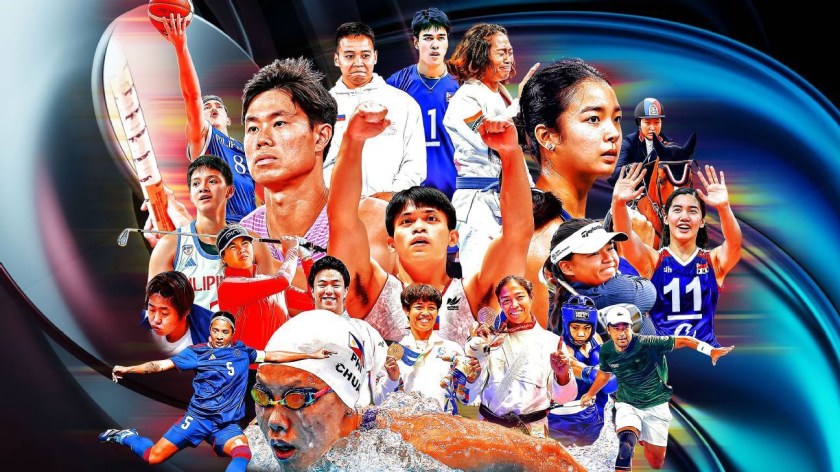
Building the Ecosystem – From Grassroots Participation to a Sustainable Pathway for Champions
(In Part 1 of this 3-part series, we analyzed how our athletes fared in the recently-concluded Asian Games in Japan. And we stressed that, instead of merely looking for champions, we must start building a system that produces them. The larger challenge for us: building a sports ecosystem that consistently produces champions rather than depending on exceptional individuals to emerge despite the limitations around them. For this second part, we discuss building a grassroots pathway that ensures promising athletes the institutional support to reach their potential.)
Butch Ramirez stands out as one of the most successful heads of the Philippine Sports Commission (PSC). During his two stints, the Philippines emerged as overall champion in the SEA Games. This was in 2005 and 2019. In conversations with him and other like-minded sporting individuals, one view consistently comes through: we must start with the children.
Bring sports closer to kids in their communities, especially in far-flung barangays. Identify their talents, nurture them, and connect them with institutions/agencies capable of developing their potential. Then sustain them through the long journey toward excellence.
The goal is to build one connected system – one that can consistently produce champions rather than leave their success to chance.
This sports ecosystem deserves closer scrutiny. Where are the gaps? How do we ensure smooth transitions from one stage of development to the next? Who should lead, and what roles should the various institutions play?
The Philippines has the talent and the institutions capable of developing it. What we need is a better-connected, inclusive and sustainable pathway – one that takes children from mere participation to excellence, and enables successful athletes, in turn, to help develop the next generation.
A Quick Look at Successful Athlete Pathways
Here is an initial comparison of four successful Filipino athletes and the different paths they took to reach the highest levels of their sport.
| Athlete | Key pathway ingredients | What key factor stands out |
|---|---|---|
| Hidilyn Diaz | Early discovery, Philippine Air Force service, specialist coaching, national-team development | Was Hidilyn’s military employment helpful? Did it provide a replicable model for sustaining elite athletes? (Military service) |
| EJ Obiena | Father’s coaching, school competition, university scholarship, international specialist coaching | Could EJ have accessed specialist development if his father did not have the initial sports skills? (Father’s talent and legacy) |
| Alex Eala | Family support, early tennis development, junior competition, specialist coaching thru academy training overseas | Can young athletes access specialist development when their families lack the necessary resources? How can we create scholarships and supported pathways to world-class coaching? (Family resources, corporate support) |
| Carlos Yulo | Early interest, access to Rizal Memorial Stadium close to his neighborhood, formal coaching and overseas development | How can we identify talent in ordinary communities, in far-flung barrios, and connect them to qualified coaches? (Proximity to equipment and coaching) |
These are documented examples of different routes to success, though not a statistical comparison of their effectiveness. By tracing these athletes’ journeys, we can identify the resources, the private institutions and government agencies, and the opportunities that contributed to their development.
The next step is to map their pathways, identify the key actors and institutions at each stage, and examine where transitions worked well – and where gaps could have hindered progress. The aim is not to replicate one athlete’s journey, but to learn how different routes can be made more accessible to the next generation.
Finding and Developing Our Next Champions
Moving forward, the first step is to strengthen grassroots sports development.
The idea is not new. Every Filipino child should have the opportunity to participate in sports, discover an aptitude and develop that potential. Yet, participation alone will not produce champions. Young athletes also need access to competent coaching, appropriate facilities, regular competition and opportunities for further development.
Our schools are a natural starting point. The Department of Education (DepEd) can help establish a stronger foundation through physical education, school sports programs, intramurals and interschool competitions. These activities should do more than encourage participation. They should also help identify children who demonstrate particular abilities and direct them toward appropriate development programs.
But can schools make a good start of it alone? Definitely not.
Local government units (LGUs) can complement this effort by providing accessible playing facilities, supporting community leagues and organizing competitions that bring together schools and communities.
The Philippine Sports Commission (PSC), the National Sports Associations (NSAs), universities and other institutions can then provide the next stages of the pathway: specialized coaching (including proper nutrition), structured training, talent development and entry into higher levels of competition.
The Armed Forces of the Philippines (AFP), through its nation-building role, can also contribute at the grassroots level. Soldier-athletes could help conduct introductory sports activities, encouraging children – particularly those in far-flung communities – to participate and explore different sports. These activities would complement, not replace, the work of qualified coaches and sports-development institutions.
These efforts need to be connected more effectively. A talented child discovered in a provincial school should not have to rely on luck, personal connections or a family’s financial resources to progress toward becoming a national athlete.
We need a pathway that is visible, accessible and continuous. This is particularly important for provinces such as Bohol, where a coordinated grassroots sports program could help identify talent outside the major urban centers. A successful pilot program could demonstrate how schools, local governments, sports associations and national agencies can work together to develop athletes.
The aim is not merely to find the next champion. It is to build a sustainable system capable of finding and developing champions year after year. Our experience in helping build the dragonboat community in Bohol offers one example of how a sport can grow through sustained local involvement and support.
Sustaining Our Athletes
Talent identification and training are only part of the challenge. Athletes also need financial security and long-term support.
The AFP has demonstrated a useful and proven model. The enlistment of athletes such as Hidilyn Diaz, Eumir Marcial and Carlo Paalam has shown how institutional employment can help athletes stay focused on their sporting careers while receiving the benefits and support associated with military service.
Their experiences offer an important lesson: developing an athlete is not simply a matter of providing support for training. It also means creating a sustainable environment in which our athletes can continue to train and compete, while securing a better future for themselves and their families.
However, the AFP cannot be expected to shoulder this responsibility alone. Other government institutions, private companies, universities and foundations must help create similar opportunities through employment, scholarships, sponsorships and other forms of support.
The Ayala Group’s Atletang Ayala program is an encouraging example. It provides selected Filipino athletes with salaried employment and flexible working arrangements while supporting their training and competition requirements. The program also provides access to sports facilities, medical services, international training opportunities and continuing education.
The principle is simple but important: athletes should not have to choose between pursuing excellence in their sport and securing their livelihood.
This approach benefits athletes, who receive more stable support, while allowing participating companies to contribute directly to national sports development. It recognizes that the discipline, perseverance and teamwork developed through competitive sports can also serve athletes well in the workplace. The program’s reported contribution of 17 medals at the 2025 Southeast Asian Games further illustrates the potential of this arrangement.
We should encourage more companies to consider similar programs. Banks, telecommunications companies, manufacturers, universities and other institutions could adopt individual athletes – or even support an entire NSA – through flexible employment, scholarships, and assistance with training and international competition.
The objective should not be to replace government support but to complement it. The more institutions that share responsibility for sustaining our athletes, the less vulnerable their careers become to changes in public funding or the availability of individual sponsors.
The AFP and Atletang Ayala models demonstrate two ways of addressing the same challenge. Both recognize that an athlete needs more than talent and training. An athlete also needs the security, resources and institutional support to remain focused on sporting excellence while building a decent and secure future.
We should build on these examples and encourage a broader national partnership among government (thru the PSC and DILG), education (thru the DepEd), the military (thru DND) and the business sector (thru POC, private corporations).
Such partnerships would benefit more than individual athletes. They would help strengthen our national sports program by ensuring that promising talent is not lost simply because an athlete can no longer afford to continue.
This is the next challenge: to connect the different stages of development and ensure that every promising athlete has a pathway forward – from the first opportunity to play, to the chance to compete, excel and build a better future for himself and the country in general.
For Part 3, the last part of our series, we shall discuss a framework for sports excellence, and its implications in the over-arching desire for a stronger citizenry and its effects in nation-building.
Cover pic courtesy of Facebook.

