28th of ‘My Story’ Series
But before the now-famous EDSA 2 Revolution happened, there were certainly many more unique circumstances I ran into during my stint with Vice President Gloria Macapagal Arroyo. My work then sometimes took me to places and situations I never imagined I would find myself in while serving as her senior aide.
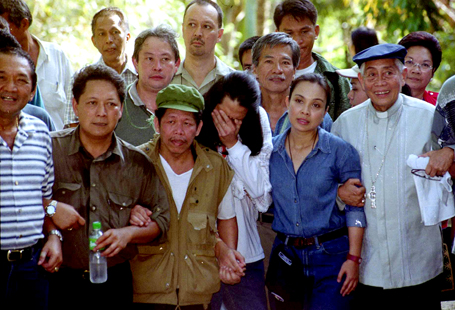
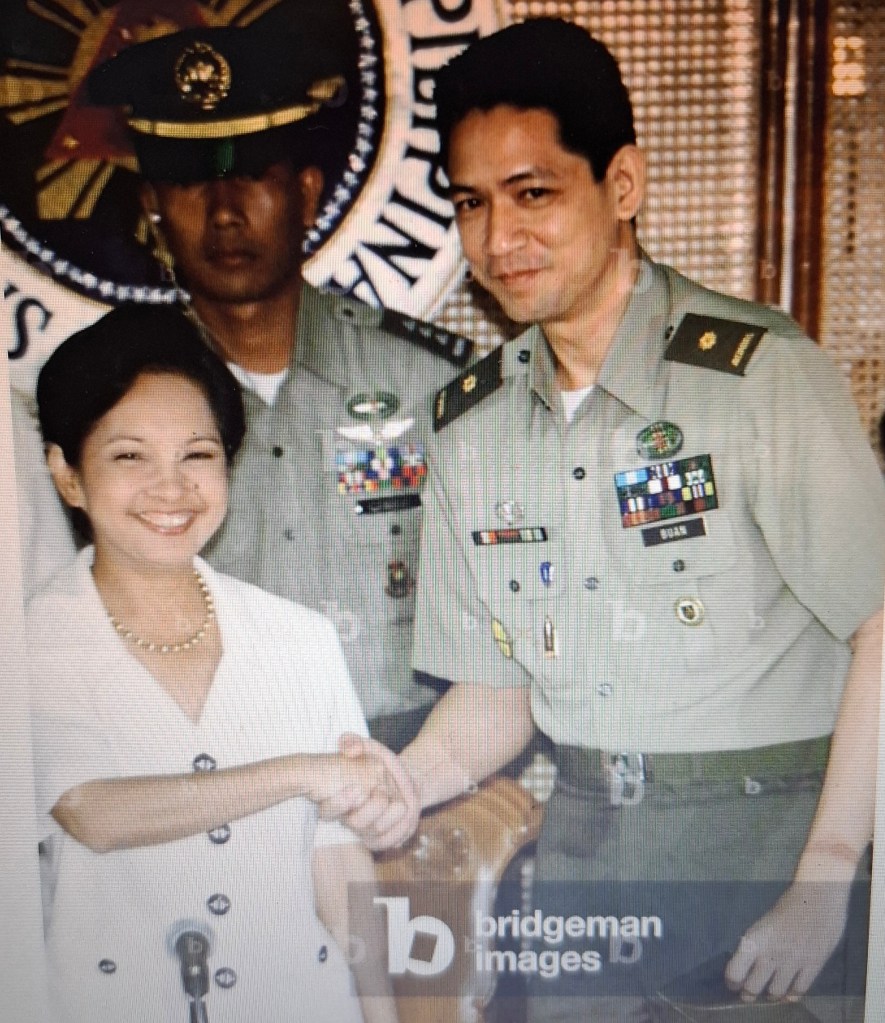
One such extraordinary occasion came when she asked me to accompany Senator Loren Legarda on a mission to secure the release of a military officer who had been held captive by the New People’s Army (NPA) for 21 months. The officer was then Major Noel Buan.
Senator Legarda had successfully negotiated Noel’s release and had coordinated with the Vice President for arrangements with the Department of Social Welfare and Development (DSWD) to ensure that the operation would proceed smoothly.
There was, however, a rather delicate aspect to my participation: nobody in the group was supposed to know that I was a military officer. If the NPA discovered my identity, they could simply have called off the release. Or worse, I could have ended up as a captive myself.
In the early morning of April 6, 2001, I joined Senator Legarda’s group at Villamor Air Base for the helicopter flight to Mindoro. Upon arrival, we were met by a convoy of vehicles that took us somewhere into the foothills of central Mindoro. From there, we began an uphill hike that lasted more than an hour before we reached the NPA camp.
Our small party, led by Senator Legarda, was now deep in the jungles of Mindoro, where the NPA had arranged what was clearly going to be a major propaganda event surrounding Noel’s release.
When we finally reached the camp, Noel saw me. I could see the surprise on his face. For a moment, he didn’t quite know how to react. I was in civilian clothes, after all, but he recognized me immediately. We had known each other quite well in the Army. We were neighbors at the Philippine Army Officers’ Village (PAOVille) in Fort Bonifacio, and our children had been schoolmates in elementary school.
Fortunately, he did not salute. That would have been quite a spectacle. Instead, he whispered as we shook hands, “Sir, tutoo na ba ito?” (Sir, is this for real?). I assured him surreptitiously that it was.
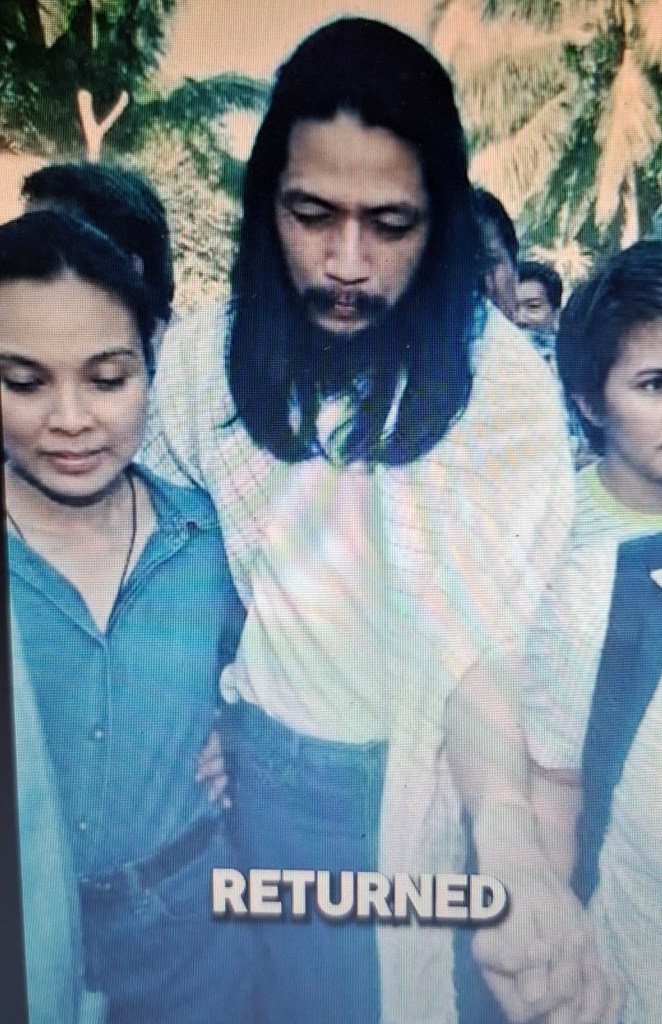
He looked remarkably different from the Noel I knew. He was relatively thinner, his hair had grown to his shoulders, and he had a scraggly beard.
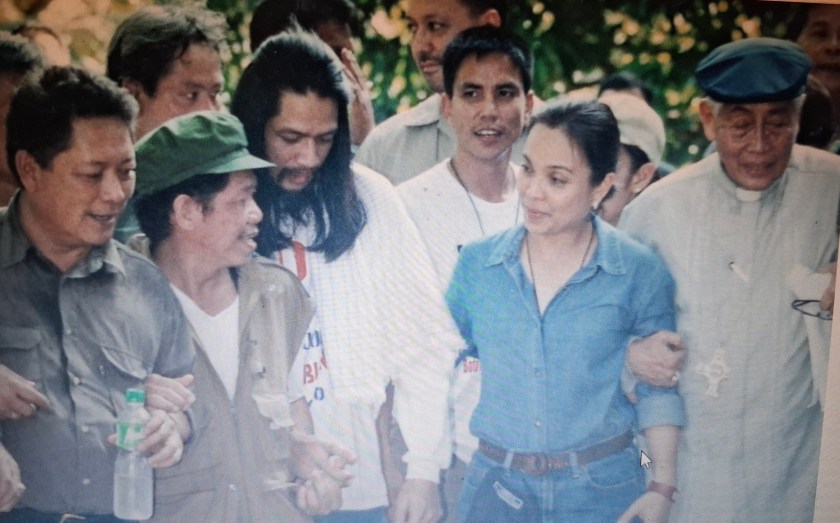
Soon afterward, we began the trek downhill to a secondary site where the NPA was to hold its press conference. Walking slowly down the mountain, I stayed close to Noel and helped him negotiate the descent, mindful of the limp he had acquired from a previous battle wound to his leg.
At a designated area in the foothills, we stopped for a brief turnover ceremony. It was here that Noel was finally reunited with his wife, Cielo, and their daughter, Jenina. It was an emotional moment for a family that had lived with the uncertainty of his captivity for 21 months. Together at last, we gave them a few minutes of private time to talk.
After a while, right before the press conference, Noel asked for a towel. He wanted to cover the T-shirt the rebels had given him to wear. Printed on the T-shirt was an NPA slogan which I can no longer recall. He didn’t want himself to be used for propaganda purposes.
At the press conference, I found myself standing in the midst of hundreds of NPA members and their supporters. Among them was Gregorio Rosal, better known as Ka Roger, the legendary spokesman of the NPA and one of the most recognizable faces and voices of the revolutionary movement.
Ka Roger would normally appear only on important occasions, and this was obviously one of them. He looked pale, and when I shook his hand, I could not help noticing how little muscle there was in his forearm. We were told that he had been ill, which explained why he had been appearing only on special occasions at that time.
For the rebels, Noel’s release was more than a humanitarian gesture. It was also an opportunity to create a powerful propaganda event. For me, it was something else entirely. I was standing in the middle of the very organization that I had spent much of my military career fighting.
At the end of the turnover activity, we wasted little time getting out of the area. We hurried back to our vehicles, proceeded to the waiting helicopters, and were soon airborne and on our way back to Manila—with Noel safely with us.
The entire episode lasted only a few hours, but it remained one of the more unusual experiences of my military life.
For someone who had spent years operating against the insurgency, it was a strange feeling to be standing among hundreds of NPA members and their supporters – not as an Army officer, but disguised as part of a team working to bring one of our own men home.
That was the nature of my assignment with the Vice President. I was no longer operating in the familiar world of military units, command posts and field operations. I was moving through the complicated terrain of politics, government and non-military initiatives, and sometimes finding myself in places where my military identity had to remain carefully concealed.
Years later, when I was at the Senate being confirmed for promotion to two-star rank, Senator Legarda finally learned that I was actually a military officer. She looked at me with surprise. She had no idea that the guy representing the OVP during that mission was a military man.
Looking back, that may have been one of the more amusing consequences of my assignment with the Vice President.
For once in my life, I had managed to play the role of a staffer/news reporter – without anyone knowing that underneath those civilian clothes was an olive-drab heart of an Army officer.
Cover pic courtesy of Lorenlegards.com.ph. Other pics courtesy of bridgemen images and Pinoyweekly.org. For a closer look, just click on the pics.