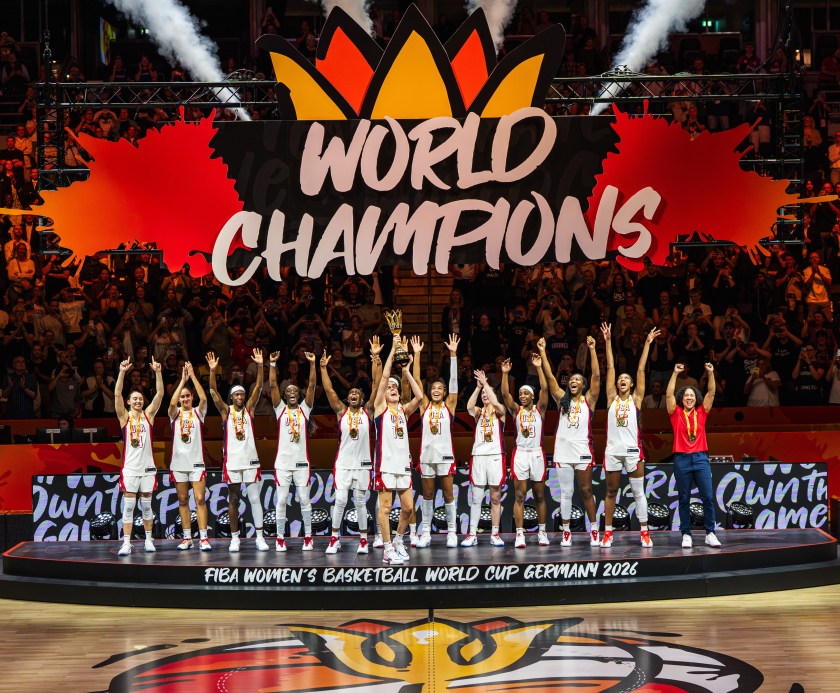
Team USA retained the latest FIBA Woman’s World Cup title, but the quest for the crown as the queens of women’s basketball may have revealed something almost as important as the gold medal itself: clearly, the rest of the world is getting closer.
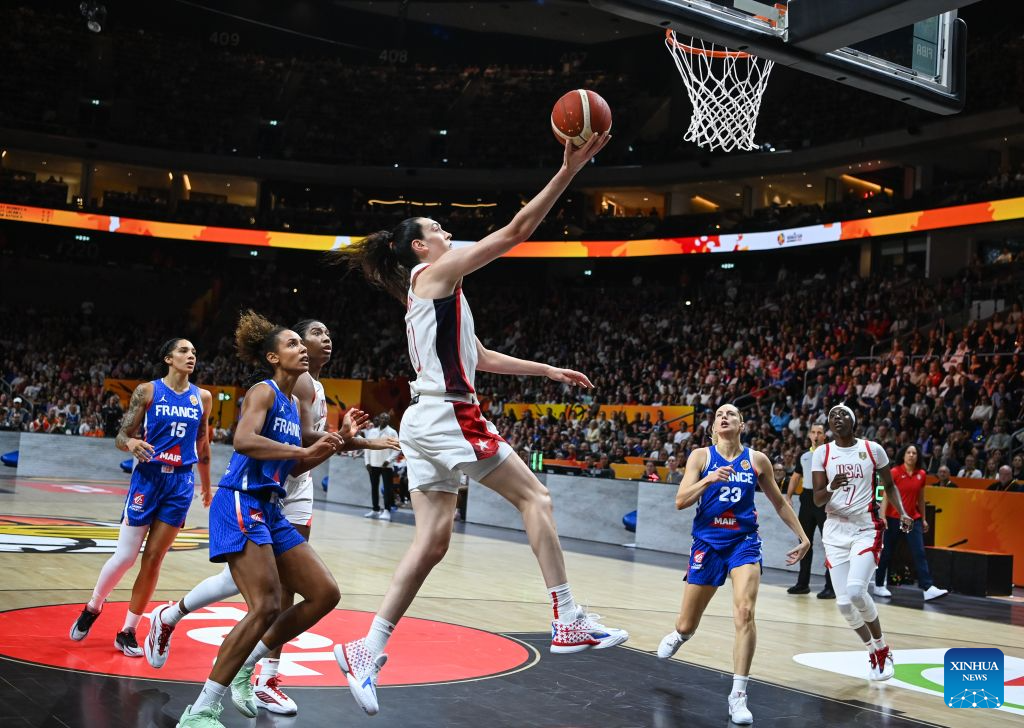
The Americans defeated France, 97-79, in Berlin to capture their fifth consecutive FIBA Women’s World Cup title and 12th overall. Yet the final was hardly the walk-in-the-park that the final score suggests. The Frenchies’ Les Bleues raced to a 14-point advantage early in the second quarter before the Americans slowly regained their composure. By halftime, the margin was only two, 45-43, and the decisive blow came in the third quarter, when the US juggernaut finally woke up for 30 points while holding France to 12.
That comeback was powered by the players who have been through the international wars before. Breanna Stewart, who eventually took the tournament MVP honors, delivered the performance expected of a veteran leader: 22 points and 10 rebounds in 30 minutes. Jackie Young added 18 points, six rebounds and five assists in 30 minutes, while Kahleah Copper scored 15 in 29 minutes. Chelsea Gray, another veteran point guard, contributed 12 points and five assists in 27 minutes. Napheesa Collier played 24 minutes and provided six points and seven rebounds.
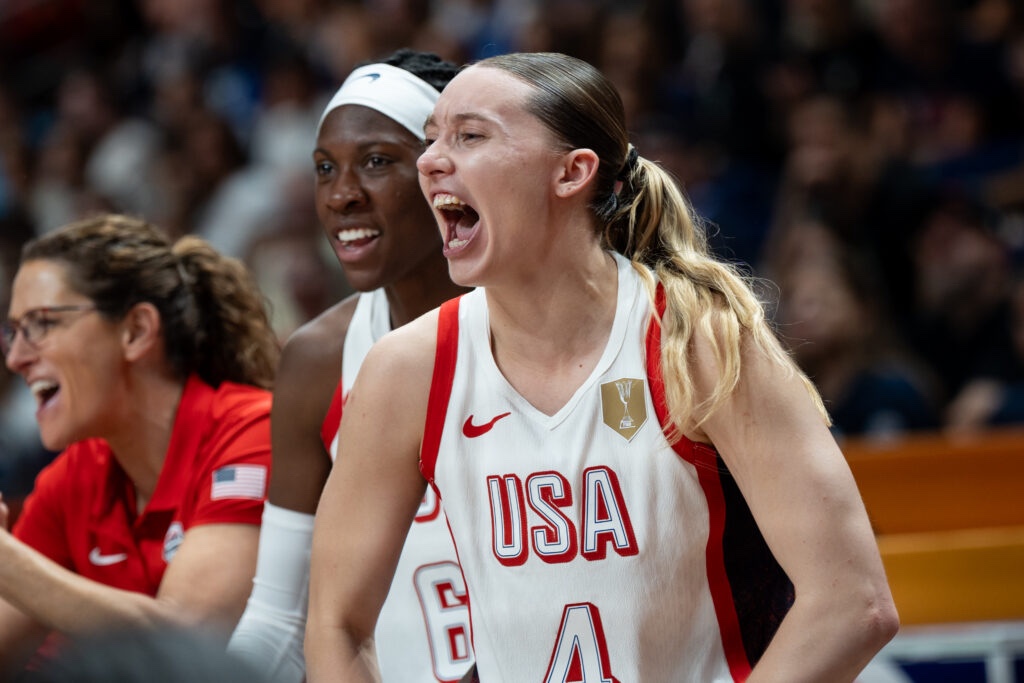
And then there’s Caitlin Clark. The most-awaited newbie played only 13 minutes in the final, yet scored 12 points on an extraordinarily efficient 4-of-5 shooting, including 2-of-3 from three-point range, while adding three assists. Her four turnovers were the only blemish to an otherwise productive cameo. Along with Clark, fellow first-time nationalists Angel Reese, Paige Bueckers, Aliyah Boston and Kiki Iriafen also made their presence felt in the tournament’s entirety. Clark would average 7.8 points and 5.3 assists in 19.3 minutes per game.
That contrast between the veterans and the newcomers is worth discussing. Caitlin, Angel, Aliyah, Paige and Kiki were making their debuts in a major senior international tournament. Yet the coaching staff did not simply throw them into the deep end. In the final, Aliyah played 16 minutes and scored seven, Angel played nine minutes and scored three, while Paige and Kiki played only three and two minutes respectively. Rhyne Howard, another relative newcomer to this level, played 17 minutes and made an impact in other ways, recording four steals despite scoring only two points.
This raises an intriguing question about team chemistry. Is it necessarily better to have twelve outstanding veteran players, with everyone expecting major minutes? Not always. Could the lack of playing time for some affect the team’s chemistry? It could.
International basketball gives coaches very little time to build a team. A core of three or four players who know that they are the principal engines of the team can develop clearer roles, stronger chemistry and greater trust under pressure. Everyone else understands who are the focal players, when to attack, when to defer and what is expected when they enter the game.
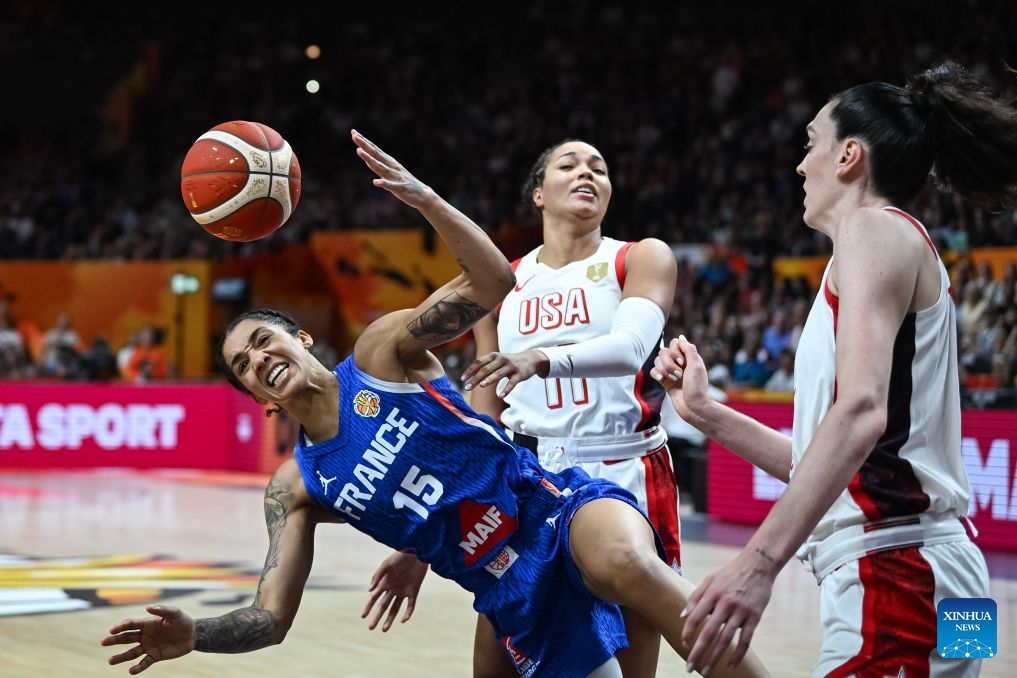
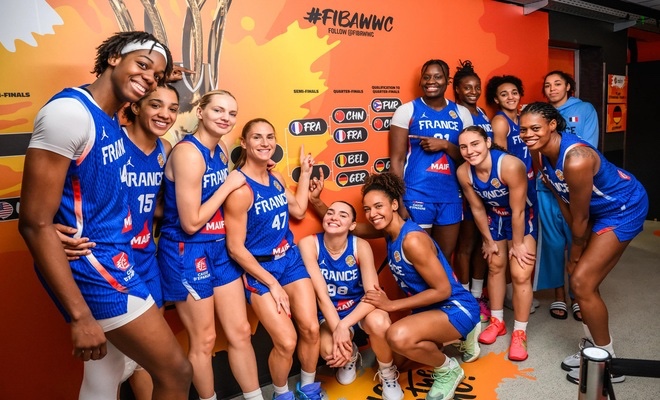
Case in point: Gabby Williams. Gabby would have never made it to the star-studded Team USA. Recruited to join Les Bleues due to her French mom, she has become the team’s main cog. And she delivered, dragging the French Les Bleues up to the finals. And the global talent pool is no longer theoretical. Fifteen of the 16 World Cup teams had at least one current or past WNBA player on their roster, according to the WNBA. And this number is expected to grow even larger.
This year’s American team actually grappled with the problem of having too many big-time players. Five established WNBA stars – Stewart, Young, Copper, Gray and Collier – carried much of the heavy lifting. Coach Kara Lawson relied heavily on her veterans. The younger players were gradually integrated around them rather than being asked to establish an entirely new hierarchy in a matter of days.
But there is a warning here for Team USA. The world is certainly catching up.
France reached its first World Cup final. France’s 20-year-old Dominique Malonga scored 21 points in the final, while Gabby Williams averaged 18.7 points, 4.8 rebounds, 4.0 assists and 2.8 steals for the tournament. Spain won bronze behind 20-year-old Iyana Martin, who averaged 17.5 points, 4.2 assists and 2.2 steals. Germany reached the semifinals and finished fourth, its best-ever World Cup result.
So how does Team USA defend a dynasty? Maybe the answer is not to assemble the twelve biggest names available, but to build a team within the team. Establish a dependable veteran core, find the best emerging stars who can play great chemistry with them, give them clearly defined responsibilities, and gradually expand those responsibilities as they earn them.
The Americans possesses extraordinary depth. But this bench depth should be a weapon, not a chemistry problem.
The rest of the world has already figured out how to challenge Team USA. Team USA struggled against Italy. They were challenged by Spain in the semis, trailing until the 3rd quarter. They once again played aimlessly up to the 2nd quarter in the finals, before their wake-up call in the 3rd. The next step for the Americans may be learning how to evolve before someone finally catches them.
For now, they remain the standard. But the distance between the standard and the challengers is clearly shrinking.
Cover pic courtesy of Wikipedia. Other pics courtesy of Just Women’s Sports, The Guardian, Sports Ethos and Xinhua.


Thanks mucho for the reblog, Ned. This should be a wake up call for the program managers here. I’ve seen this happen so many times, even in my small community. A team of superstars sometimes gets waylaid because of this thing they call chemistry, or the lack thereof.
LikeLike
Charly, I have always thought it logical to try and puzzle together the most cohesive team in these competitions, but in the US we often just take the top players and hope for the best. The top players expect this treatment, and to be sure they glean advertising opportunities from being part of the country’s team. Money talks, and at the end of the day it is also easier for the selectors to just take the best players and not create chaos or controversy by leaving a star or stars off the roster. That being said, the gap is closing for sure.
LikeLiked by 1 person
Very true, Bruce. It’s the money – and the egos – that will matter here. It is difficult to piece together a coherent team with many options on the table. You just have to roll the dice on the selection process and hope for the best.
LikeLiked by 1 person