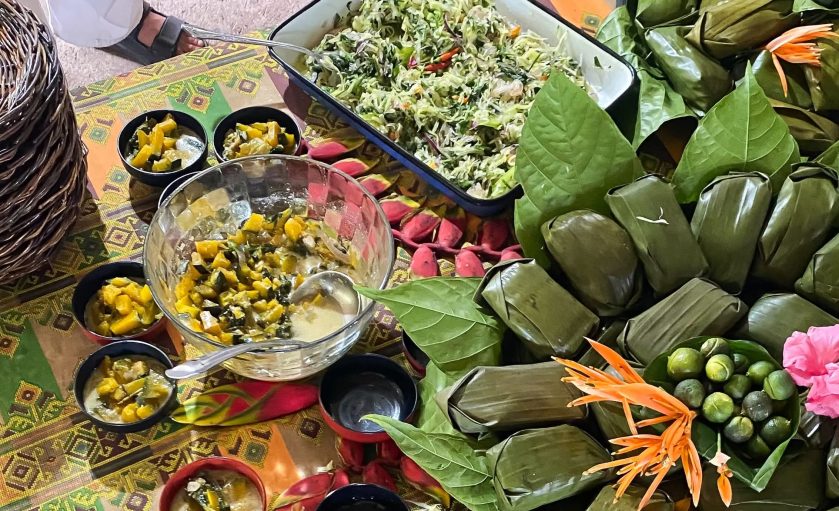
Day 3 – Learning to Connect
“Nature never works alone.” After learning to observe on the first day and to think differently on the second, our third day in the workshop introduced us to perhaps the most beautiful lesson of all: nothing in nature exists by itself.
Every living organism belongs to a much larger story.
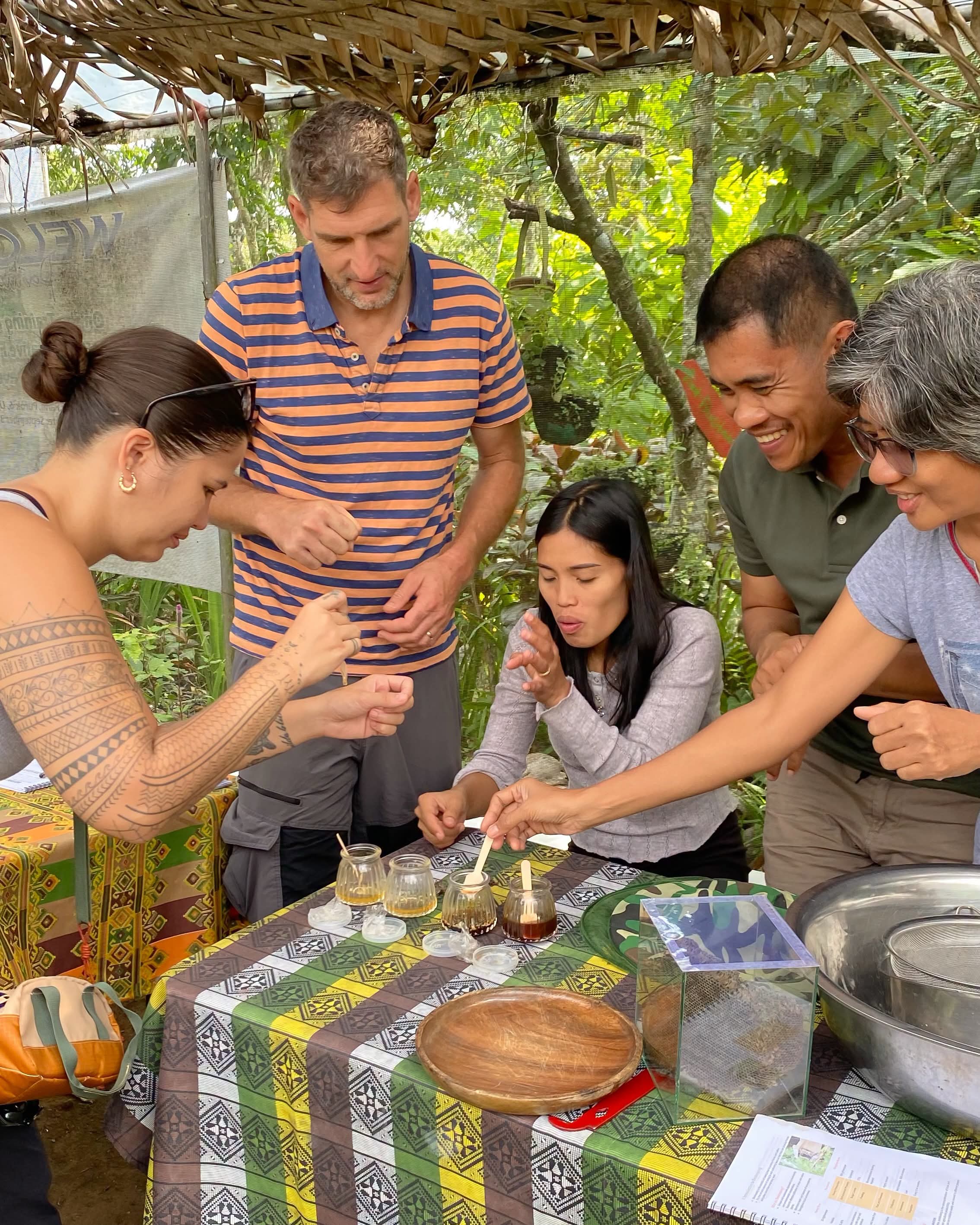
Slowly, we were introduced to the countless invisible partnerships that make life possible. The tiny stingless bees quietly pollinate flowers that eventually become fruits on our tables. Beneath the ground, billions of microorganisms tirelessly decompose leaves and organic matter, releasing nutrients back into the soil. Earthworms patiently tunnel through the earth, improving its structure and allowing water and air to nourish plant roots. Even the humble black soldier fly, an insect many people dismiss without a second thought, plays an extraordinary role by converting organic waste into valuable nutrients that return to the land.
Slowly, we began seeing that nature wastes nothing. Everything has a purpose. Everything serves another. Nothing lives only for itself.
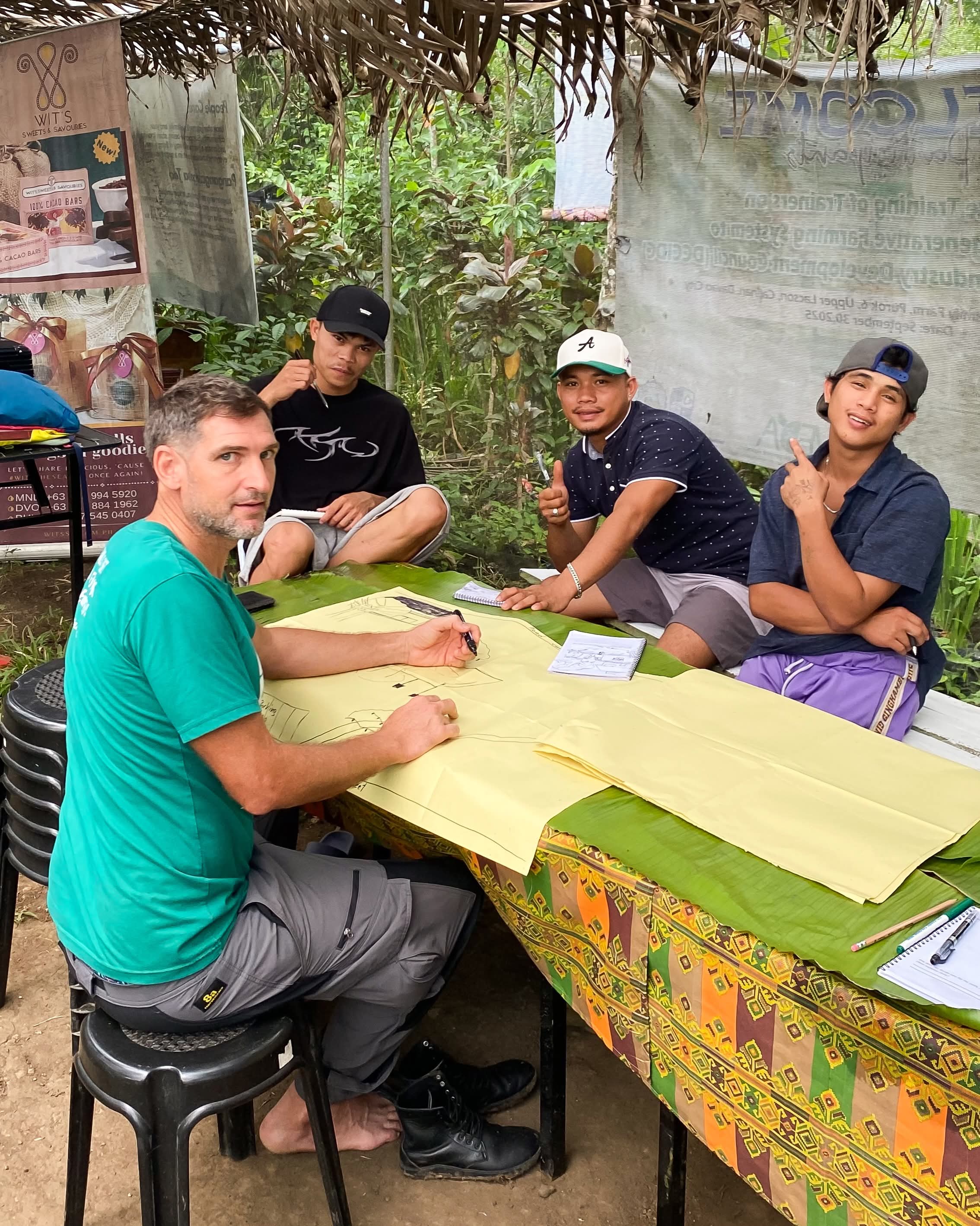
For someone like me, who had spent decades in the military solving problems by looking at immediate objectives, this way of thinking felt surprisingly refreshing. Nature wasn’t merely a collection of individual organisms. It was a community built on relationships.
That realization extends even far beyond the farm. The same principle governs our families, our workplaces, and our communities. Healthy relationships create healthy systems. When one member flourishes, everyone benefits. When one part suffers, the entire system eventually feels the effects.
Somewhere between examining compost, observing the stingless bees, learning about vermiculture, and discovering the remarkable work of the black soldier fly, I realized that I had spent much of my life standing on soil without truly seeing it. To me, it had always been the ground beneath my boots – a place to walk on, to build on, or to cultivate. But now I was beginning to understand that the soil itself is alive. It breathes. It nourishes. It remembers. It quietly sustains every tree, every insect, every bird, and ultimately every human being who depends on it. And for the first time in my life, I found myself looking down with more respect and gratitude instead of indifference.
And then we examined how easily these natural relationships can unravel through human actions. Excessive pesticide use destroys not only harmful insects but also beneficial pollinators. Rampant deforestation strips the land of its protective cover, exposing fertile soil to erosion and interrupting the slow, patient work of nature. Industrial practices often value immediate yield over long-term health, forgetting that every harvest depends upon the continued vitality of the land itself.
As I walked back across Gran Verde Farm that afternoon, I realized that I was walking around differently. I noticed things that I never noticed before – a patch of shade, the way the cacao interacts with taller trees, the birds I’ve ignored for years, or how fallen leaves are quietly doing their work.
Slowly, I found myself looking down more often than ever before. Not because I was tired, but because I had developed a new respect for what lay beneath my feet. I realized that the greatest lesson of the day wasn’t about compost, bees, worms, or insects. It was about relationships. Nature survives because everything contributes to something greater than itself. Perhaps we humans were always meant to live the same way.
That afternoon, I left believing that the health of the earth will never depend on one spectacular invention. It will depend on millions of quiet partnerships – between man and nature, between neighbors, between one generation and the next. And perhaps, that is exactly how hope grows.
Click here for a preview of Day 3. Video courtesy of Sixto Bereber.
Click here to view Part 4 of this 5-part series: The Five Days That Changed The Way I See The World.
Cover pic as well as all other pics courtesy of Joshua Holganza.


One comment