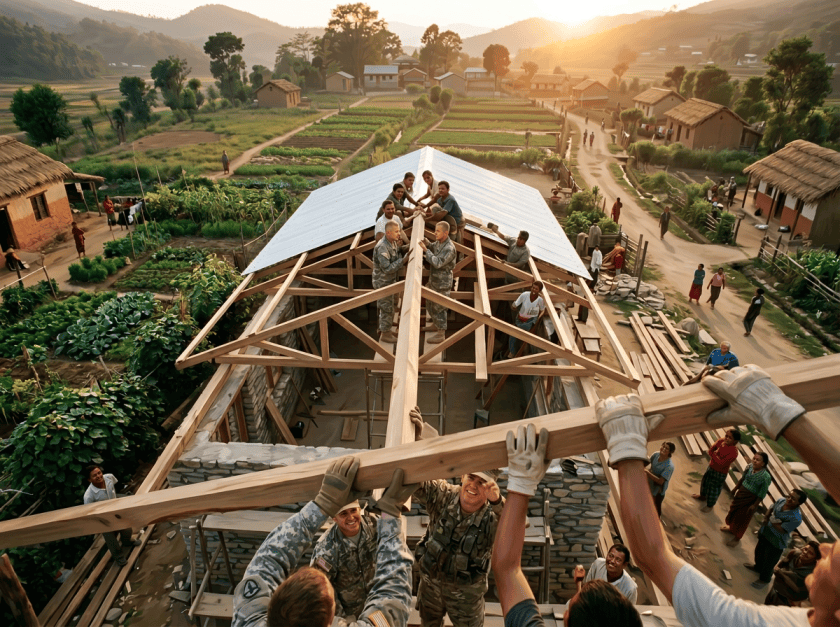
(25th of ‘My Story’ Series)
After my stint with the 3rd Infantry Battalion (3IBn), I found myself wanting to simply pause and reflect on what those challenging, yet deeply fulfilling years in the field had done for me.
I had entered the Army believing, as most young officers probably do, that leadership was largely about having the courage to make difficult decisions, the competence to carry out complex missions, and the authority to make men follow. From the mountains of Quezon, Bicol, Agusan, Davao, Samar and Leyte, to the hidden communities of Carmen in Central Mindanao; from the integration of former rebels into our ranks to the silencing of the guns in Buldon – those experiences had slowly begun to change the way I viewed insurgency, conflict, leadership, and even the purpose of military power itself.
I began to realize that leadership in the military was not simply about commanding men. It was about earning their trust. It was about being willing to share their dangers, listen to their fears, understand their aspirations, and, whenever possible, help them see a future beyond the difficulties of the present.
Credibility, I learned, could not be demanded by rank. It had to be earned – one challenge, one difficult decision, one shared hardship at a time.
And just as significantly, I had begun to see conflict differently.
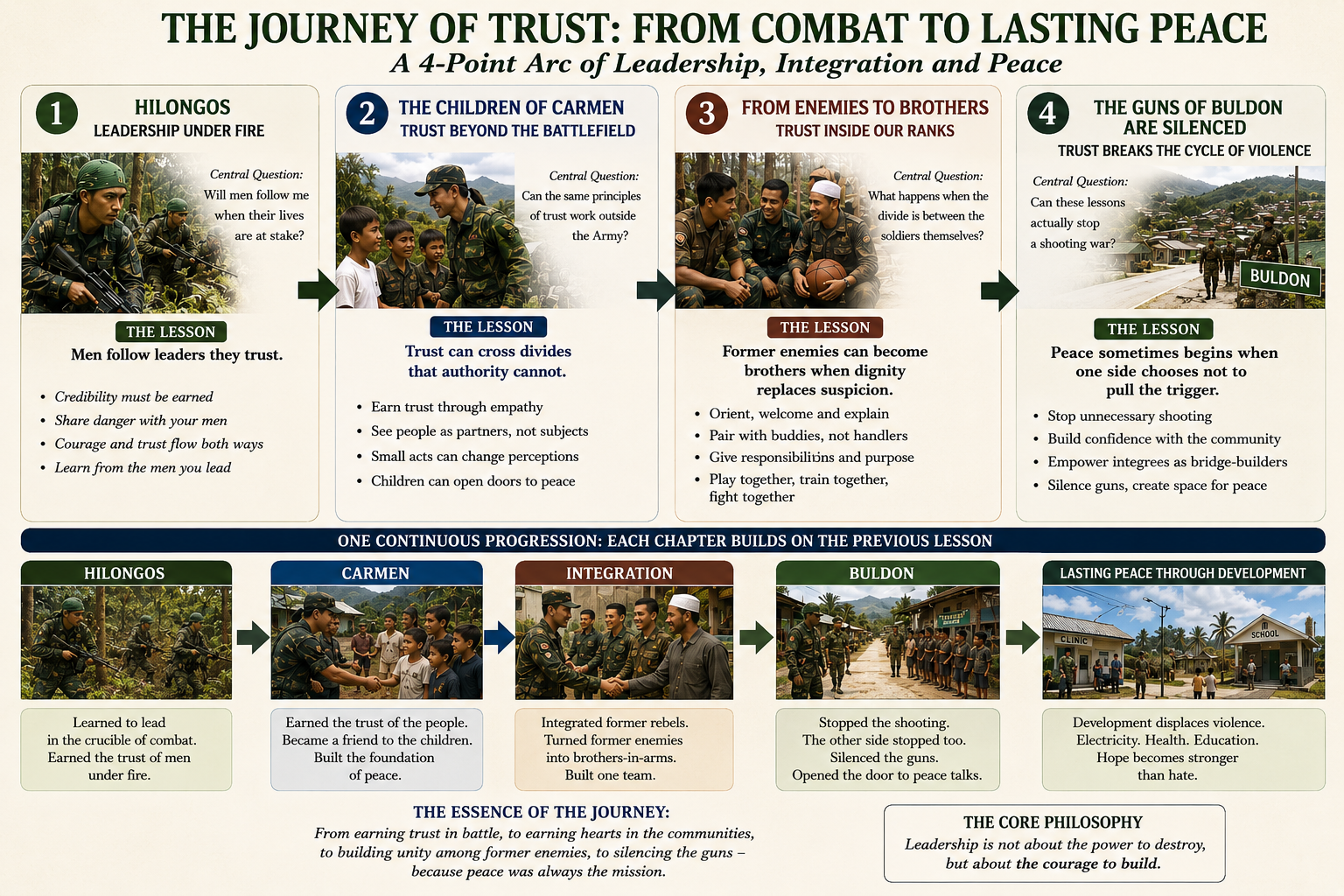
In Hilongos, I learned what it meant to lead men when their lives were at stake. In Carmen, I learned that sometimes the most powerful weapon was a child’s willingness to see an enemy differently. Through the integration of the MNLF fighters, I learned that former enemies could become brothers if they were treated with dignity and given a genuine sense of belonging. And in Buldon, I discovered that sometimes the first step toward peace was simply choosing to stop the shooting.
These experiences slowly planted in me a growing conviction: that the ultimate measure of military success should not be how much destruction we can inflict, but how much trust we can build – and how much peace we can create.
I had spent much of my career learning how to fight. Increasingly, however, I found myself drawn toward a different purpose. Somewhere along the way, a new dream – nurtured years earlier by the four Army Chiefs I had served, and later further reinforced by Generals Garcia and Nazareno – had begun to take deeper root within me.
I was beginning to see the wisdom of winning friends as opposed to eliminating enemies. In the growing debate between focusing on security and initiating development, I was slowly learning that it is better to build rather than destroy.
Not merely to build homes, roads, schools and infrastructure. But to build trust where there had been suspicion. To build relationships where there had been hostility. To build communities where conflict had left division. And, perhaps most importantly, to build hope where generations had known little else but fear.
I began to dream of something beyond simply winning battles. I wanted to see communities that were no longer afraid; children who could go to school no longer fearful of the gunfire they used to hear; farmers who could cultivate their fields without wondering if they would make it home that evening; and families who could look toward tomorrow with hope rather than suspicion.
I did not yet fully understand how deeply this new conviction had begun to change me, nor where it would eventually lead. But the direction was becoming increasingly clear.
My years as a Ranger had taught me how to fight and win. But the experiences that followed were teaching me something more profound: that the real purpose of strength is not to dominate, but to create the conditions in which people may no longer want to – or moreso, have to – fight.
Looking back now, I realize that Hilongos, Carmen, the integration of the MNLF integrees, and Buldon were not four separate experiences. They were four steps in a much deeper journey.
A journey from commanding a unit to true leadership. What I Learned From the Hills of Hilongos. Just click on the title.
A journey from suspicion to trust. The Children Of Carmen. Just click on the title.
A journey from eliminating enemies to creating brothers-in-arms. From Enemies to Brothers-in-Arms. Just click on the title.
And, ultimately, a journey from war-fighting to peace-building. The Guns are Silent in Buldon. Just click on the title.
It is not enough that we know how to wage war. We must never forget that the ultimate purpose of war is to achieve long-lasting peace. War is just an instrument to achieve peace. And to achieve that permanent peace, we must all strive to build and nurture it.
I did not realize it then, but these lessons would soon take me far beyond the mountains and villages of Mindanao – and onto a much larger stage.
The journey was far from over.
For a closer look, just click on the pic.


2 comments